Not New, but Worth Knowing: 23,000-Plus Medieval Manuscripts Now Open to Everyone as Text
Students, historians and curious readers can explore the words of more than 23,000 medieval manuscripts that were once only photographs online. Inria's CoMMA corpus, first reported in January, used handwriting recognition on Latin and Old French manuscripts, and in September 2026 the team released the data in a new format on Hugging Face.
A plain note first: this is not new news. CoMMA was first reported in January 2026, and its peer-reviewed description appeared at the LREC 2026 conference in May. What moved recently is the data itself. In September 2026 the team posted another version of the corpus on Hugging Face, in the ALTO layout format, and coverage of the project kept spreading through the summer.
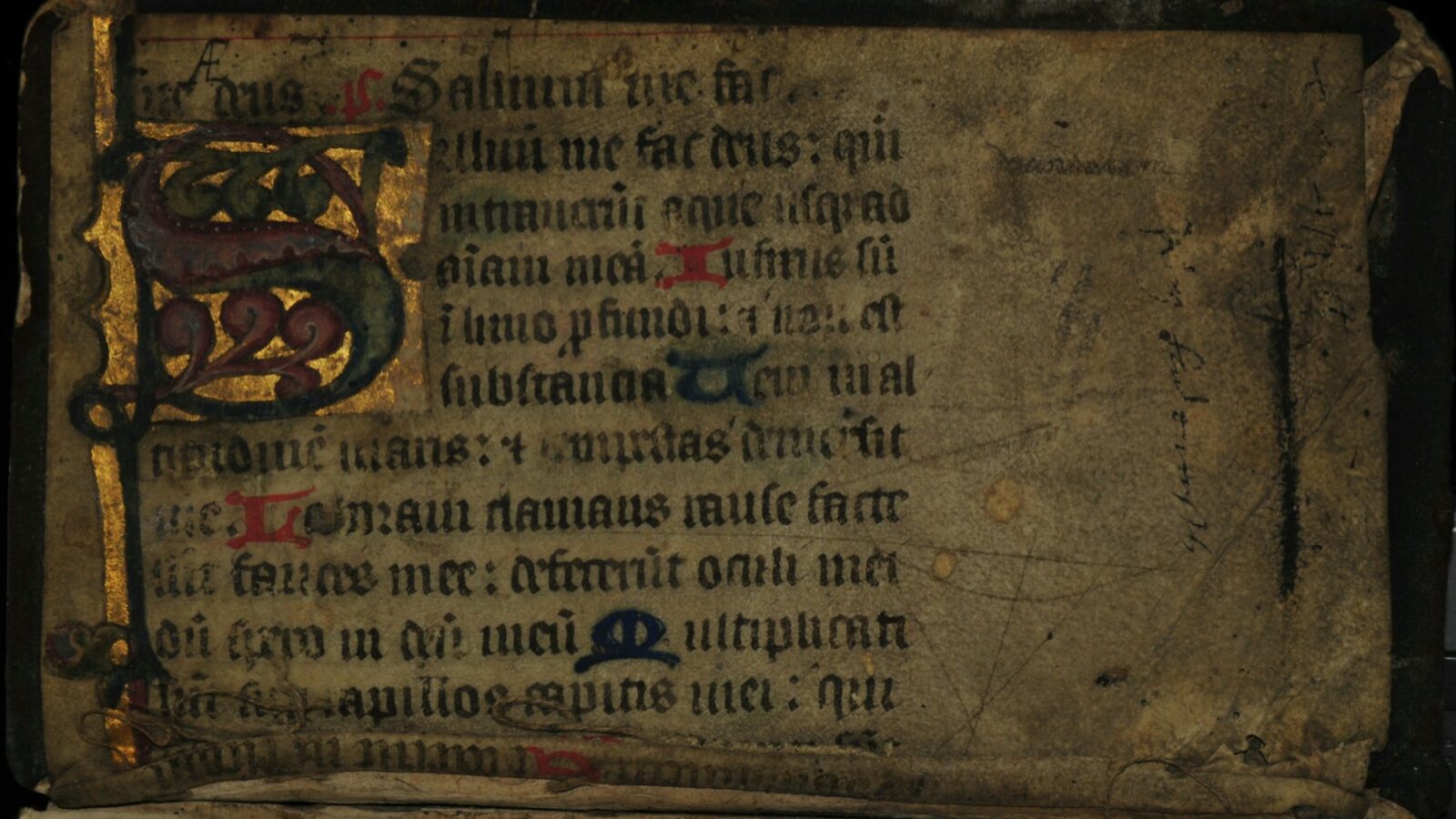
It is worth a second look because of who it serves. For decades, libraries have photographed medieval manuscripts and put the images online. That was a gift, but a picture of a page is not text. You cannot search it, count its words or line it up against ten thousand other books. A team led by Thibault Clérice at Inria, France’s national institute for digital science, used handwriting text recognition to turn more than 23,000 of those digitized Latin and Old French manuscripts into text, according to the LREC paper, and opened the result to anyone.
According to the paper, CoMMA holds around 2.5 billion tokens, gathered through IIIF, the shared image standard many libraries use. The text is kept raw, as written, with abbreviations and spellings intact, and comes with layout information about where each block sits on the page.
Who could use it
- A student of language. Questions that once took a career of reading, such as how spelling and vocabulary shifted across centuries, can now start with a search across the whole corpus. The authors say the resource can support corpus linguistics and digital humanities.
- A historian following texts. How texts traveled, or which works were copied most, become questions to ask of the corpus first and the manuscripts second.
- Someone building tools for old languages. The authors also name the training of language models for historical languages as a use.
The fine print every user should know
The text has errors, on purpose. The team reports an average character error rate of 9.7 percent. Medievalists.net, reporting in January 2026, said the team checked that figure by hand on three consecutive lines in each of 670 manuscripts. According to Futura-Sciences, which covered the project in August, no human corrected the output afterward. As Clérice told Medievalists.net, chasing a slightly lower error rate would have cost far more time than it was worth at this scale. The job is hard: Futura-Sciences reported that in 14th-century Latin manuscripts, up to 35 to 40 percent of words are abbreviated.
The work stands on shared, open tools. The recognition models were trained on a corpus called CATMuS, started in 2022 by Ariane Pinche of France’s CNRS, which Medievalists.net said began with about 300 manuscripts and roughly 200,000 hand-transcribed lines. The recognition runs on open-source tools, eScriptorium and Kraken, developed at EPHE, Université PSL. Futura-Sciences listed Gallica at the French National Library, the Swiss e-codices portal, the Bodleian Library in Oxford and the Bavarian State Library in Munich among the sources of the pages.
The counts depend on who is counting. Medievalists.net put the full run at 32,763 manuscripts, transcribed in about four months, a larger figure than the paper’s; the project’s own dataset page uses the paper’s figure. Medievalists.net also reported that the largest previous Old French corpus held about 11 million pseudo-words, against 516 million in CoMMA, and that Latin went from 226 million words to 2.7 billion. Those counts track the larger total and do not match the paper’s 2.5 billion tokens, so treat them as approximate.
There is something touching here: medieval scribes, abbreviations and all, read by software that learned from lines modern scholars transcribed by hand. Any finding drawn from the corpus still has to be checked against the manuscripts, because a 9.7 percent error rate means exactly that. But a student with a question no longer has to wait a lifetime to ask it. The CoMMA website is open to anyone ready to begin.
Sources
- CoMMA, a Large-scale Corpus of Multilingual Medieval Archives (LREC 2026, pages 7034 to 7045)
- 32,000 Medieval Manuscripts Transcribed Using AI
- CoMMA JSON-L dataset card (CC-BY 4.0)
- CoMMA corpus homepage
- Centuries-old secrets uncovered: AI finally deciphers mysterious ancient manuscripts
- CoMMA ALTO dataset
Every claim in this story was checked against these sources on October 15, 2026. Spot something wrong? Tell us and the correction will be dated on this page.