A Step Toward Voice Technology for 675 Underrepresented Languages, Built From Archive Recordings
Speakers of endangered languages could one day get speech tools in their own tongue, built from 30,202 hours of archived recordings. Researchers at Yonsei, McGill and Mila turned recordings from the Endangered Languages Archive into a public, non-commercial training set and early speech models.
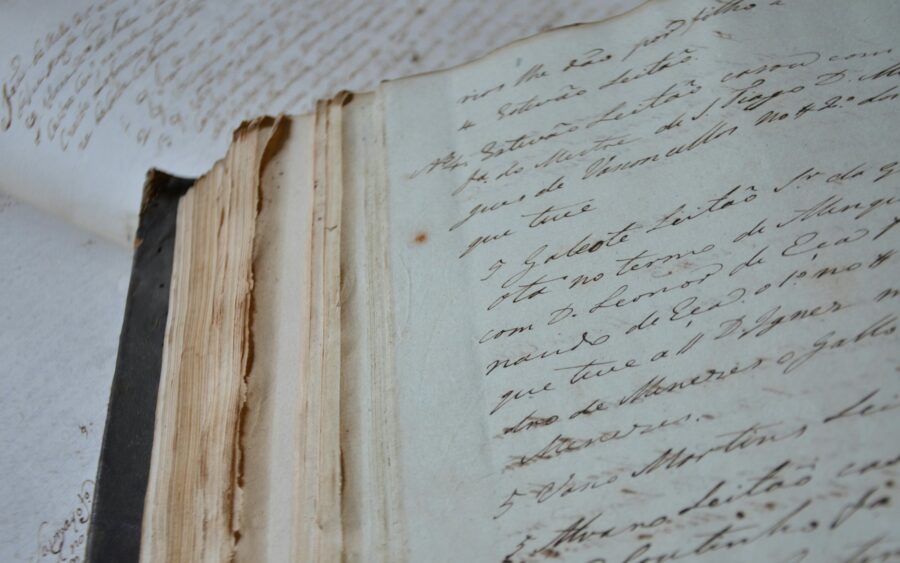
For years, field linguists and language communities have been depositing recordings in the Endangered Languages Archive: conversations, narratives, interviews, ceremonies, songs. The recordings come with very uneven transcriptions, and audio without text is hard for anyone to search or use.
In a preprint posted October 14, 2026, Sangmin Lee of Yonsei University and Yejin Jeon and David Ifeoluwa Adelani of McGill University and Mila turned that archive into ELARSpeech: 30,202 hours of speech in 675 languages from 78 language families. By the authors’ count, 259 of those languages are not supported by existing multilingual speech models, and 53 have no ISO 639-3 code, the standard international code for languages. They are releasing the dataset, their trained models and their full pipeline.
What did the AI actually do?
The sorting came first, and it was not AI. Archive files come with many kinds of notes, and only some are real transcriptions. The team wrote a rule-based scoring step to pick out the transcription layers, reviewed borderline cases by hand and spot-checked the rest: of 1,000 automatically accepted samples, 993 were valid. That yielded 2,791 hours of speech paired with text across 443 languages, plus 27,412 hours with no usable text.
The AI work came next. They fine-tuned existing speech recognition models, including Whisper, on the transcribed recordings. Trained one language at a time on 30 test languages, Whisper got about 22 percent of characters wrong on average. Then they let models write draft transcripts of the untranscribed audio and trained on the best of those drafts, which cut errors by up to 6.1 percent in relative terms. They also trained a speech synthesis model that, by automatic tests, produced intelligible speech for 14 languages with at least 5 hours of usable recordings.
Does one big model for everything work?
Not yet. A single model trained jointly on all 233 languages in the training and test splits did worse than the one-language models, raising the average character error rate from 22.48 to 30.71 percent and winning on only one of the 30 test languages. Widely used pretrained speech models also performed worse on these recordings than on a standard multilingual benchmark. The authors read this as a sign that existing multilingual speech models still struggle to reach the long tail of the world’s languages.
Did the communities agree to this?
This is the right question, and the paper answers it partly. The team consulted the archive, which confirmed machine learning research was allowed within each collection’s access conditions. They used only materials marked Open or User Access, left out anything requiring a collection steward’s permission, kept the provenance of every collection, released the data for non-commercial use only, and said they acknowledge language communities’ say over how their recordings are used, committing to honor requests to remove material. They also wrote this:
“We recognize that permission to access archival materials does not remove the responsibility to respect the individuals and communities represented in them.” Lee, Jeon and Adelani, ELARSpeech preprint
The paper describes consulting the archive, not each language community directly. That is worth watching as the data spreads.
So who could this help?
Picture the person who deposited a box of recordings years ago and never found time to transcribe them. A model that can draft a first transcript, even an imperfect one, turns listening time into reading and correcting time. Picture a teacher who would like a recorded voice for a lesson in a language no app supports. Neither is ready today. The synthetic voices were rated mainly by listeners who were not expected to speak the languages, so nobody yet knows how they sound to a speaker. That test, a fluent ear hearing its own language come back from a machine, is the one that matters.
Sources
- ELARSpeech: A 30K-Hour Dataset Across 675 Underrepresented Languages for Long-Tail Multilingual Speech Technologies
- ELARSpeech full text (HTML)
- ELARSpeech code and data release
- Endangered Languages Archive
Every claim in this story was checked against these sources on October 15, 2026. Spot something wrong? Tell us and the correction will be dated on this page.