Curators Could Learn How Asia’s Palm-Leaf Manuscripts Were Made Without Harming Them
Libraries caring for South and Southeast Asia's palm-leaf manuscripts could learn how each leaf was made, using only non-destructive measurements. A Hamburg-led team paired synchrotron X-rays with machine learning; how a leaf was processed came through clearly, where it was made only some of the time.
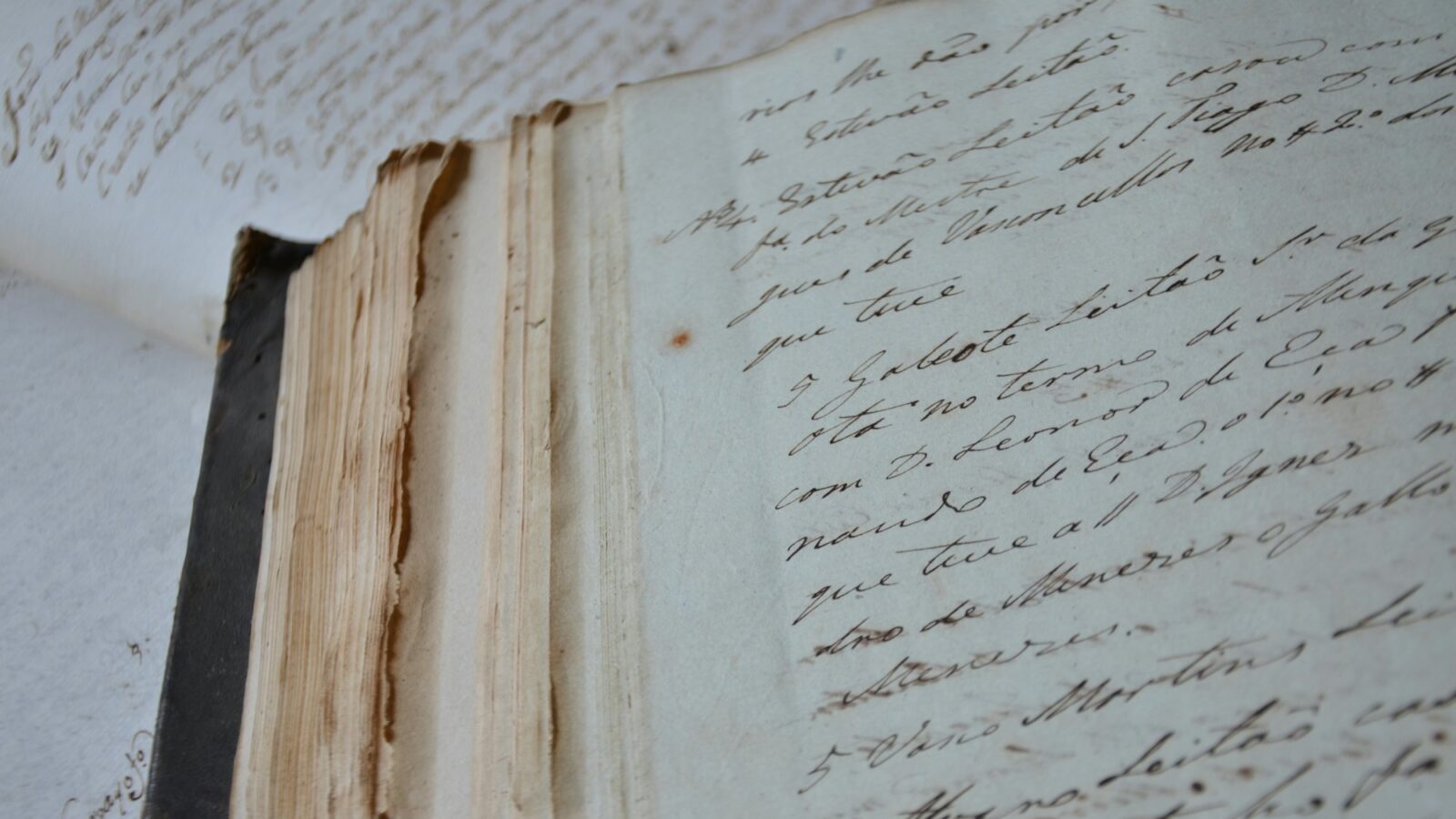
For centuries, people across South and Southeast Asia wrote their religious texts, law, literature and science on palm leaves. Those bundles now sit in libraries and collections, and the people who look after them often know little about where or how a given manuscript was made. The leaves themselves hold that story: which palm they came from, how they were boiled, dried and polished, and where. The trouble is that a curator cannot cut a manuscript open to ask.
A study published October 6, 2026 in npj Heritage Science shows the leaves can answer some of those questions without harm. A team led by Laura Gallardo and Patrick Huber at Hamburg University of Technology, working with Giovanni Ciotti of the University of Bologna and colleagues, measured leaves with three X-ray techniques at once, all non-destructive, and used machine learning to compare them.
What the leaves gave up
The team measured raw palm leaves, modern writing supports and historical manuscripts, including whole folios and fragments that had already come loose. The scans were made at the P62 beamline of DESY’s PETRA III synchrotron in Hamburg and at the ESRF in Grenoble. According to DESY, the dataset held 160 entries: 85 palm-leaf manuscripts and 75 modern reference materials from collections across South and Southeast Asia.
Each scan yields measurements of cellulose crystallinity, fiber orientation and chemical elements. No single number separates one manuscript tradition from another, which is where pattern-finding models earn their keep. The team fed these descriptors to six supervised machine learning methods, including random forests and support vector machines, and checked them with cross-validation. They also tested the models against dummy classifiers and shuffled labels, to show the signal was real rather than an artifact of uneven sample sizes. I always cheer a little when a team tries this hard to prove itself wrong.
The clearest answer was about making. The models could reliably tell what stage of processing a leaf had reached. Telling the two main palm genera apart, Corypha and Borassus, worked better on processed material than on raw leaves, which suggests preparation changes the leaf in ways the models pick up.
What they could not say yet
Place was harder. Measurements from India, Indonesia and Thailand were classified correctly more than 80 percent of the time. Sri Lankan and Myanmar measurements were right only 43 and 42 percent of the time. Some regional groups had few samples, and these figures come from individual measurements rather than entirely unseen manuscripts, which the authors note may overestimate performance.
Even the mix-ups carry history. Sri Lankan and South Indian material looked alike, which the authors say is consistent with published records of similar plant use in Tamil Nadu and Sri Lanka. Thai samples formed a comparatively distinct group, which the authors suggest may relate to preparation practices such as kiln treatment, though they say that mechanism still needs direct testing.
The authors are firm that no library should relabel a collection on this alone. In the paper’s words, the classifications are comparative material profiles, not definitive provenance assignments, and must be combined with codicological and historical evidence.
Who it could help
The paper describes the approach as scalable and non-destructive, so it could be applied across whole collections. That matters to scholars and communities in South and Southeast Asia trying to understand how their written traditions were made and shared, and the curators trying to keep those bundles safe. For them, the leaf can now offer one more line of evidence, set beside the script and the style, and nobody has to take a blade to it to get it.
Sources
- Multimodal synchrotron X-ray analysis of palm-leaf manuscripts: structural and compositional signatures of botanical genus, manufacture, and provenance
- Palm-leaf manuscripts reveal traces of their preparation through X-rays and machine learning
Every claim in this story was checked against these sources on October 15, 2026. Spot something wrong? Tell us and the correction will be dated on this page.