Eighteen Children Got an Answer After a Model Reread Their Unsolved Genomes
Eighteen families got an explanation for their child's condition after a language model took a second look at their genome data. Boston Children's Hospital, Harvard and OpenAI reanalyzed 376 unsolved cases and report the results in NEJM AI.
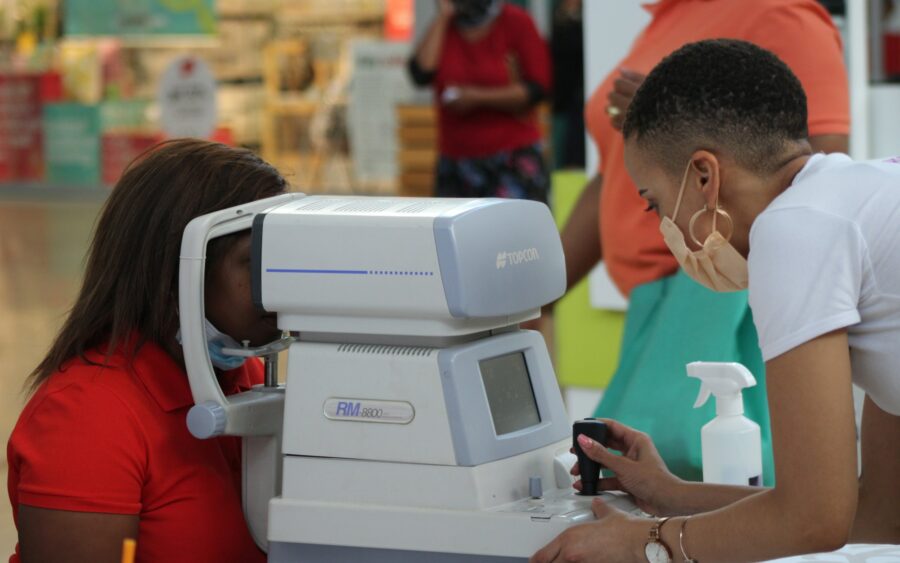
Nearly Twice as Many People With Diabetes Reached Eye Care After Instant AI Results
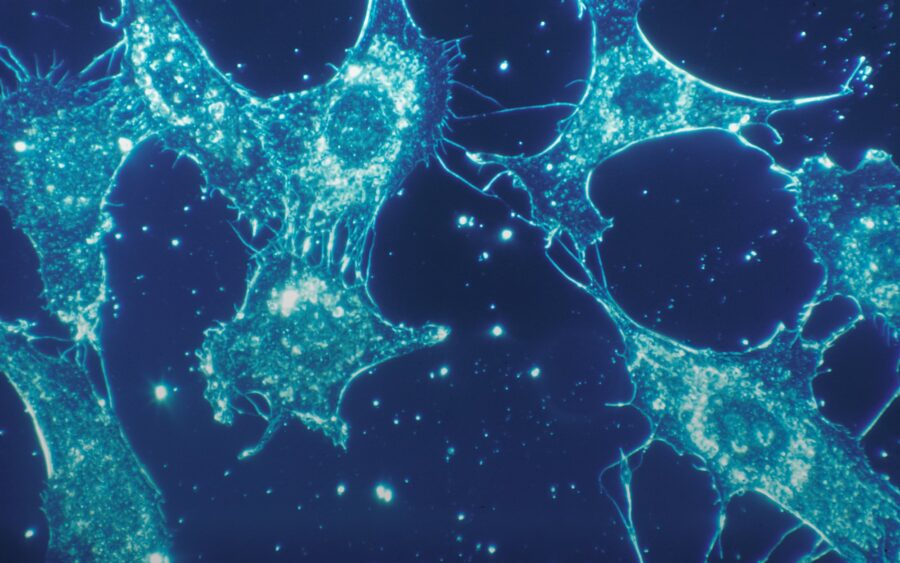
Hidden Human Proteins Found by Shape Could One Day Become Drug Targets
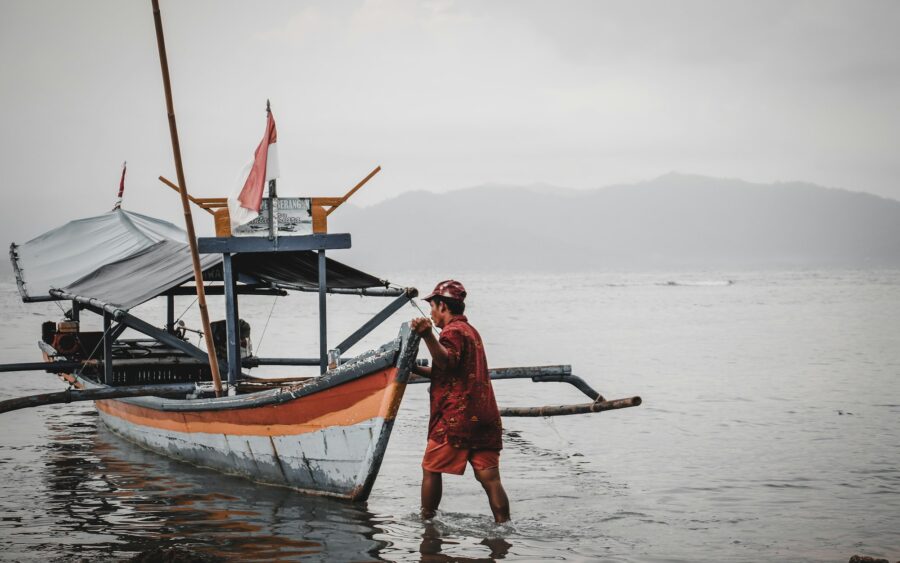
Underwater Microphones and AI Could Help Guard the Reefs That Feed Coastal Communities
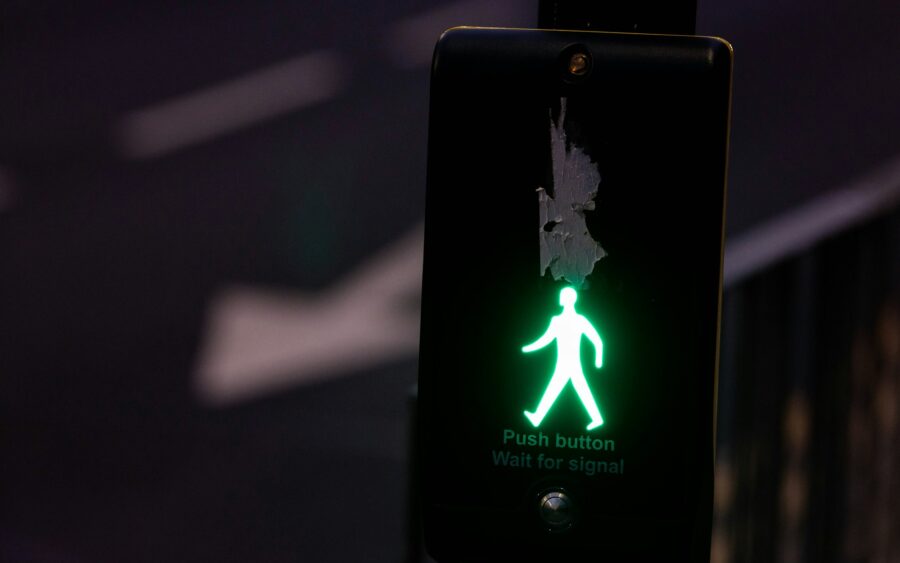
A Phone App Could Help Blind and Low-Vision People Walk Outdoors More Independently
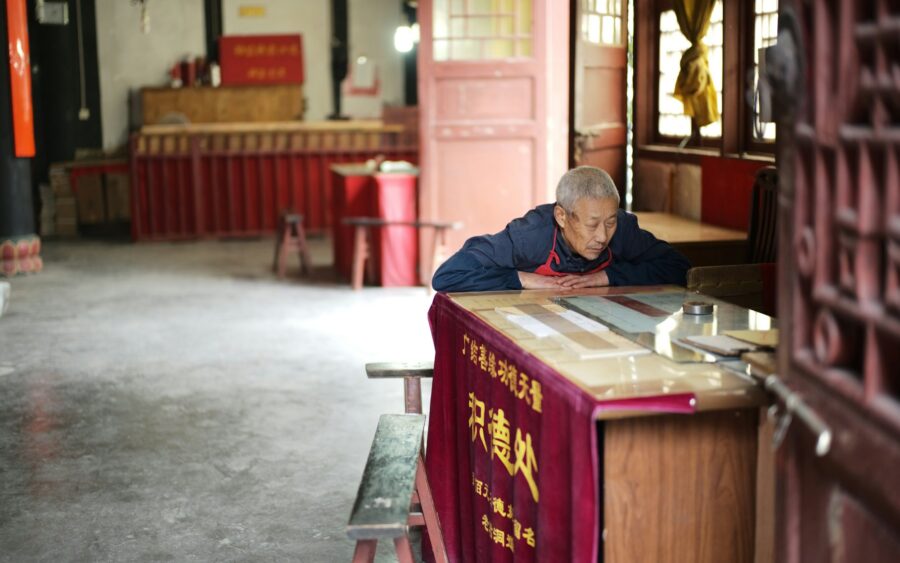
Cantonese Elders’ Life Stories Could Reach Families Sooner With an AI First Draft
Life stories from New Zealand's Cantonese elders could reach families and historians sooner, with a speech model drafting transcripts in hours. A University of Otago and New Zealand Chinese Association team ran Whisper on nearly 13 hours of interviews and found it reliable mainly on the English.
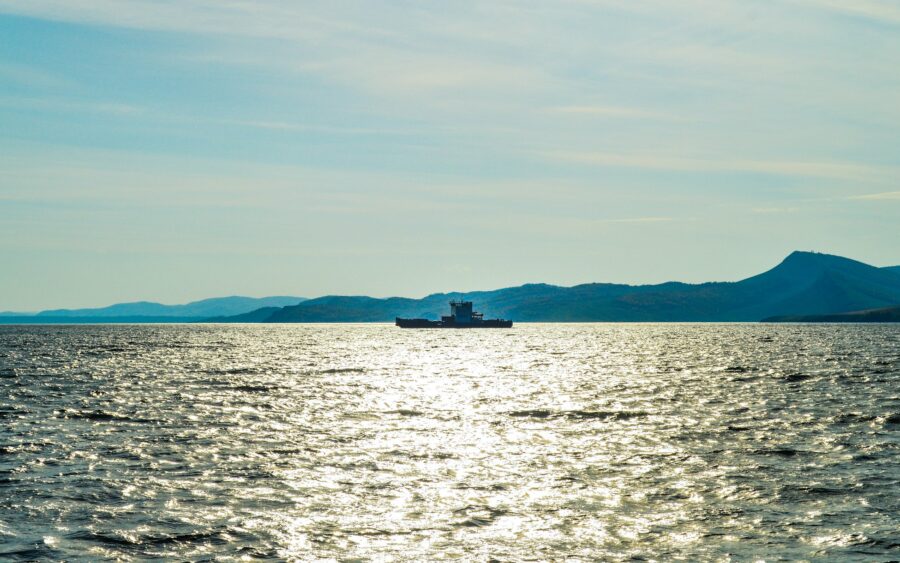
Ships Could Find Their Way Without GPS by Feeling Earth’s Gravity
Ships that lose or distrust satellite signals could steer by gravity instead. In a sea trial off Australia, Q-CTRL's quantum gravimeter cut position error about sixfold.
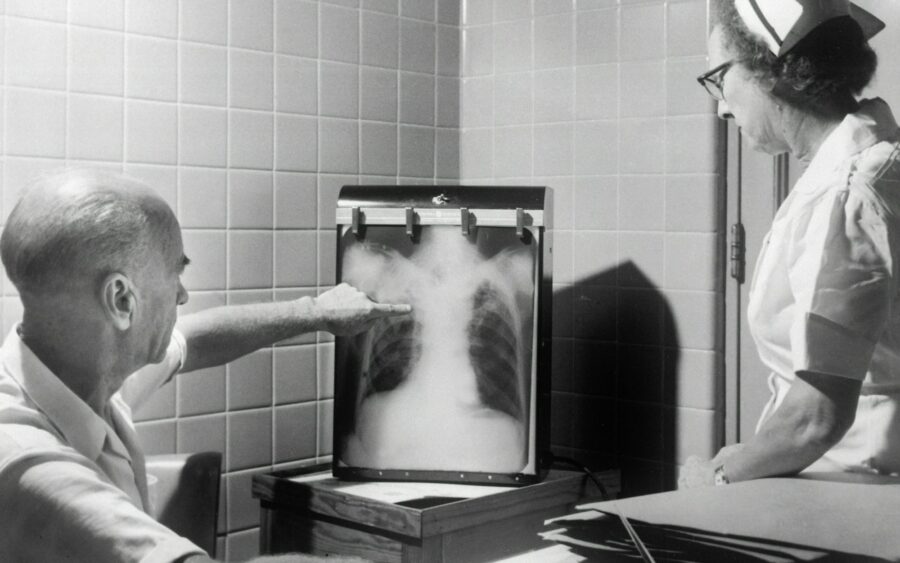
Finding Hidden TB for Less: AI X-Ray Reading Alone Beat Adding a Blood Test
AI software reading chest X-rays on its own found more hidden TB in Lesotho and South Africa, at lower cost, than when a blood test was added. The Swiss TPH-led trial of 20,023 adults, which compared two AI-based strategies, appeared in The Lancet Infectious Diseases.
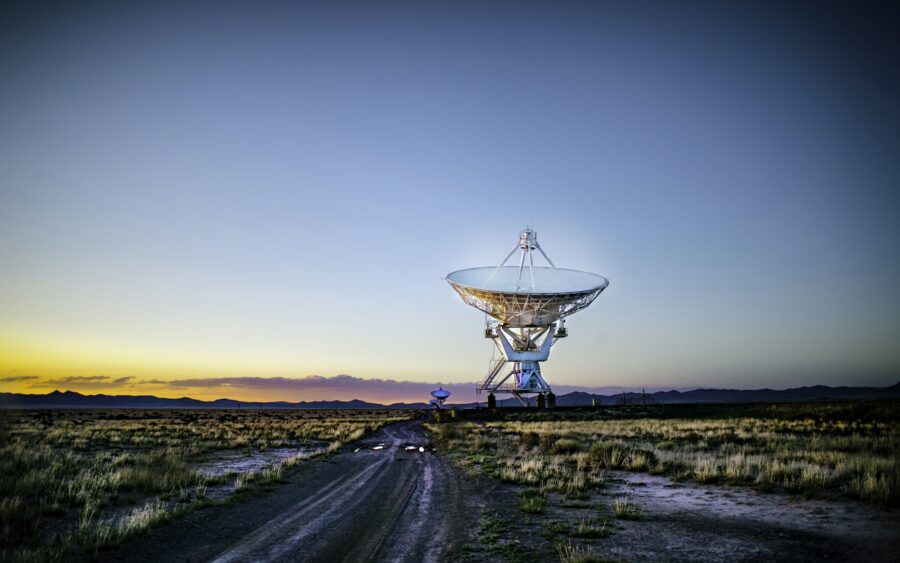
Anyone Can Now Watch 27 Years of a Black Hole Jet, Thanks to AI
Anyone can now watch a black hole's jet move across 27 years, in a video built from real radio telescope data. A Nature study from IAA-CSIC, Caltech and Toronto used a neural network to make it.
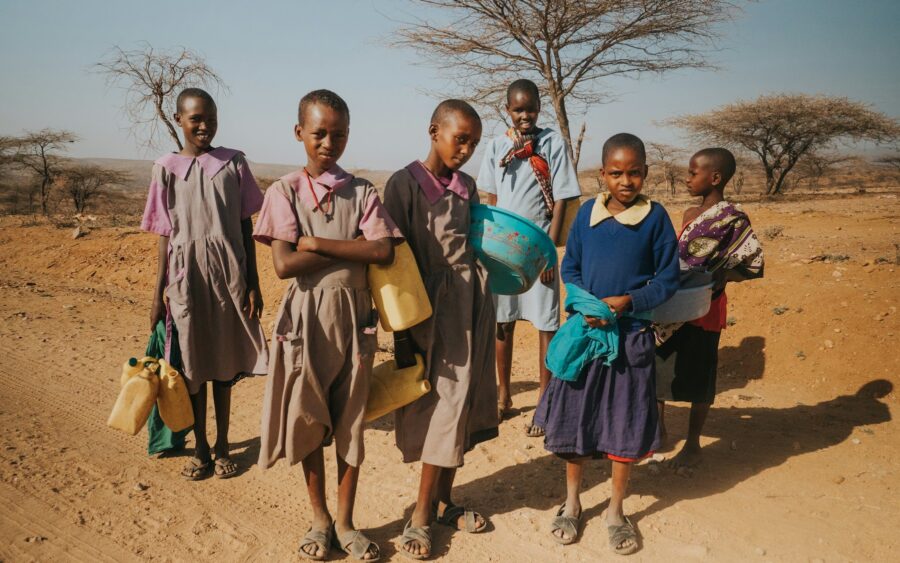
Help Could Reach Hungry Kenyan Children Sooner as Forecasts Join Drought Warnings
Kenya's drought agency now uses machine learning forecasts of child malnutrition, aiming to get help to families before hunger peaks. The method, from UC Berkeley, Cornell, IFPRI, the agency and the US Census Bureau, was published in PNAS in 2025; what is new is its use in Kenya's early warning system in 2026.

Everyday Dashcam Photos Could Help Cities Find Flooded Blocks That Nobody Reported
Street photos from ordinary car dashcams could show cities which neighborhoods flood, including ones nobody reports. Cornell Tech and UC Berkeley researchers tested the method on more than 1.4 million images.
A Step Toward Voice Technology for 675 Underrepresented Languages, Built From Archive Recordings
Speakers of endangered languages could one day get speech tools in their own tongue, built from 30,202 hours of archived recordings. Researchers at Yonsei, McGill and Mila turned recordings from the Endangered Languages Archive into a public, non-commercial training set and early speech models.
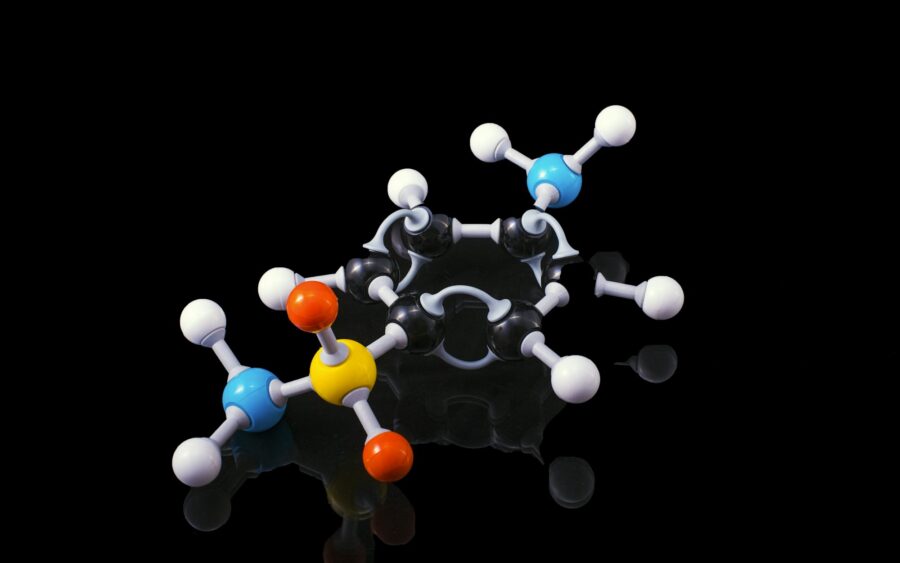
Quantum Computers Could One Day Help Chemists Check the Molecules Behind New Medicines
Chemists checking new drug candidates could one day get help from quantum computers. On 42 qubits, Quantinuum and HQS simulated a hard NMR spectrum whose main features matched the classical answer.
There is good news coming out of laboratories every week. We find it, check it against the original research, and tell you how close it is to reaching you.
Every claim is checked
We read the paper, not the press release, and link it so you can see it yourself. If a number cannot be traced to its source, it does not run.
You see how close it is
Every story carries a proximity call and an evidence stage, so you can tell a result in mice from something already helping people today.
The story does not stop
Discoveries go on the Breakthrough Tracker and we come back to them. When nothing has moved in months, we say that too.
Hopeful, never hyped
We lead with who a discovery could help and how life could change, and we never claim more than the evidence does.
One good discovery, every day. Start with today's, or have the week delivered on Sunday.
The Breakthrough Tracker
Every discovery we follow, with the date it last moved. When nothing changed, that is stated rather than left blank.
LLM-assisted reanalysis of unsolved rare disease genomes
Eighteen families got an explanation for their child's condition after a language model took a second look at their genome data.
- Field
- Medicine and health
- AI contribution
- Central
- Status
- Retrospective multicohort study complete: 18 new diagnoses in 376 unsolved cases
- Last status change
- June 25, 2026
- Next milestone
- Prospective multicenter evaluation with predefined endpoints and comparator baselines
- Primary source
- NEJM AI
The study was retrospective, and the authors describe the absolute number of new diagnoses as modest. It did not systematically address structural variants, repeat expansions, deep intronic changes or mosaicism on a large scale, although the authors report finding them in a 15 case pilot set, and it did not measure time to diagnosis, cost, interrater agreement or changes in patient management. Four of the authors list OpenAI as their affiliation, and the paper says prompt development and model testing were supported by Boston Children's Innovation and Digital Health Accelerator and OpenAI.
AI diabetic eye screening in Tanzania
People with diabetes in Tanzania were nearly twice as likely to reach an eye specialist when AI read their eye photos and they got results on the spot.
- Field
- Medicine and health
- AI contribution
- Significant
- Status
- Randomized trial complete (ISRCTN18317152); Ministry committed to integrating AI diagnostics into screening in multiple regions
- Last status change
- October 12, 2026
- Next milestone
- Rollout of AI-supported diabetic eye screening in additional Tanzanian regions
- Primary source
- The Lancet Global Health
Even with the AI pathway, most people who needed referral did not reach the clinic within eight weeks (157 of 437 did), and the trial measured clinic attendance, not whether vision was saved. The gain reflects the instant result and the face-to-face counseling together, so the software's own share cannot be separated. The trial was funded by the British Council for the Prevention of Blindness, CBM (Christian Blind Mission) and the Sir Halley Stewart Trust; one author reports equity in Big Picture Medical and consulting fees from several eye-care companies, and the declaration of interests does not mention EyRIS, the AI maker named in the protocol.
BRAVO brain-computer interface trial
People who cannot speak could one day talk with words and gestures together, through a single brain implant.
- Field
- Medicine and health
- AI contribution
- Central
- Status
- Listed as recruiting; trial began November 2018, data for this study collected September 2022 to November 2025
- Last status change
- September 14, 2026
- Next milestone
- Decoding tested in more participants and with larger vocabularies of words and gestures
- Primary source
- Nature Neuroscience
This is three people, and the simultaneous speech-and-gesture work was done in only two of them, using vocabularies of discrete phrases and gestures rather than open-ended language. The paper states the research is not intended to inform conclusions about the primary outcomes of the clinical trial, and the avatar is a laboratory system, not an approved device. In the paper's competing-interests statement, two authors, including Edward Chang, are inventors on pending UCSF patent applications relevant to the decoding methods, and Chang is a cofounder of a neurotechnology company.
WeatherNext Cyclones in operational hurricane forecasting
People in a hurricane's path could get about a day more warning, from an AI model hurricane forecasters have already begun to use.
- Field
- Climate and planet
- AI contribution
- Central
- Status
- Running live since June 2025; experimental guidance used by NHC forecasters; peer reviewed in Nature (Aug 2026)
- Last status change
- August 6, 2026
- Next milestone
- Season verification for 2026 and extension to rainfall, storm surge and gusts (named by the authors as future work)
- Primary source
- Nature
The model still depends on ECMWF's analysis of current conditions as its starting point, and it does not yet forecast rainfall, storm surge or gusts, which cause much of the damage. The authors note that traditional models still add real value for intensity, and most of the authors are Google employees.
IBM verifiable quantum advantage (doped Clifford sampling)
If quantum computers are ever going to be trusted with answers people rely on, claims about them have to survive outside scrutiny.
- Field
- Quantum computing
- AI contribution
- Central
- Status
- Original claim classically simulated (Aug 2026); revised periodic-boundary experiment posted Sept 2, 2026 as a preprint
- Last status change
- July 28, 2026
- Next milestone
- Peer review and any classical challenge to the revised 64-qubit circuit
- Primary source
- arXiv
Both papers are preprints and have not been peer reviewed. The revised 64-qubit experiment has not yet faced a published classical challenge, and the task (sampling from specially designed circuits) is a benchmark, not a useful calculation.
Mobilio navigation app
A smartphone app could one day help blind and low-vision people walk outside more safely and on their own.
- Field
- Engineering and materials
- AI contribution
- Significant
- Status
- Peer-reviewed study with 14 participants; not yet publicly released; Harvard is pursuing commercialization
- Last status change
- August 24, 2026
- Next milestone
- Wider real-world testing around Boston and work toward a product
- Primary source
- Nature Biomedical Engineering
This was a small study (14 participants) on set routes in the Boston area, compared with Google Maps plus a cane rather than with guide dogs or other specialized aids. The app is not yet available to download, and how well it works across many cities, weather and lighting conditions is still to be tested. Harvard's Office of Technology Development says it has protected the innovations from this research and is actively pursuing commercialization opportunities; the paper itself declares no competing interests.
Vesuvius Challenge: reading the Herculaneum scrolls
Readers and historians have the first words from a Herculaneum scroll too fragile to unroll, still sealed since Vesuvius buried it in AD 79.
- Field
- History and archaeology
- AI contribution
- Central
- Status
- Surviving text of PHerc. 1667 read end to end (announced June 2026, preprint); first letters found in PHerc. 343 (October 2026)
- Last status change
- October 8, 2026
- Next milestone
- $1M Grand Prize deadline, June 25, 2027
- Primary source
- Vesuvius Challenge
This is a reading of a few letters from one small segment, checked by the challenge's papyrologists but not yet published in a peer-reviewed edition. Who wrote PHerc. 343, and what it is about, are still unknown.
DESI Strong Lens Foundry
Fifty five confirmed cosmic lenses give scientists new ways to study dark matter and how fast the universe is expanding.
- Field
- Science and discovery
- AI contribution
- Central
- Status
- 55 of 76 network-selected candidates fully confirmed with VLT/MUSE spectra, 15 awaiting more observation, 6 ruled out; published in The Astrophysical Journal Supplement Series, August 2026
- Last status change
- August 13, 2026
- Next milestone
- Further spectroscopy and Hubble imaging of remaining candidates from the neural network search
- Primary source
- The Astrophysical Journal Supplement Series 286, 9
Only 55 of the 76 candidates are fully confirmed with both lens and source redshifts. Fifteen have a lens redshift only and the authors say they need more observations, and six were not lenses. The campaign covered 76 of the thousands of candidates the network searches produced.
A week of discovery
Every day leads with a different field, and every one of them is a reason to be glad you are alive right now. Sunday brings the week together in one email.
Medicine and health
Drug discovery, diagnosis, trials and devices.
Science and discovery
Biology, chemistry, physics and astronomy.
Climate and planet
Clean energy, conservation and forecasting.
Engineering and materials
Batteries, materials and infrastructure.
History and archaeology
Lost sites, ancient languages, old records.
Quantum computing
Qubits, error correction and the first real uses.

A week of discoveries, one email, every Sunday.
The week's verified discoveries, what moved on the tracker, and one big question answered. If it was a quiet week in a field, we say so instead of filling the space.