Medicine and health
New medicines found by models, diseases caught earlier, and devices that give people back what they lost. Every story says how close it is to a patient.
New in Medicine
Eighteen Children Got an Answer After a Model Reread Their Unsolved Genomes
Eighteen families got an explanation for their child's condition after a language model took a second look at their genome data. Boston Children's Hospital, Harvard and OpenAI reanalyzed 376 unsolved cases and report the results in NEJM AI.
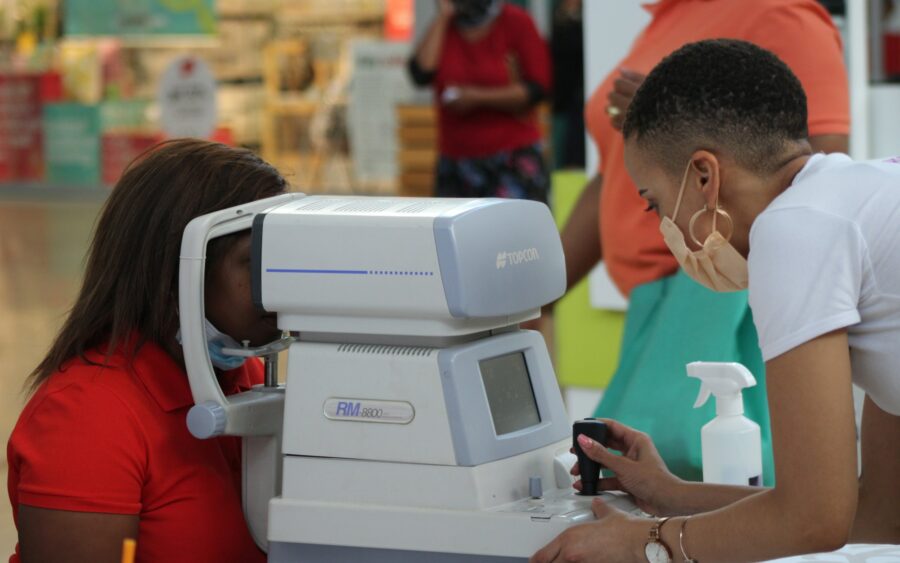
Nearly Twice as Many People With Diabetes Reached Eye Care After Instant AI Results
People with diabetes in Tanzania were nearly twice as likely to reach an eye specialist when AI read their eye photos and they got results on the spot. A randomized trial of 2,378 people at 24 hospitals, led by LSHTM, reports it in The Lancet Global Health.
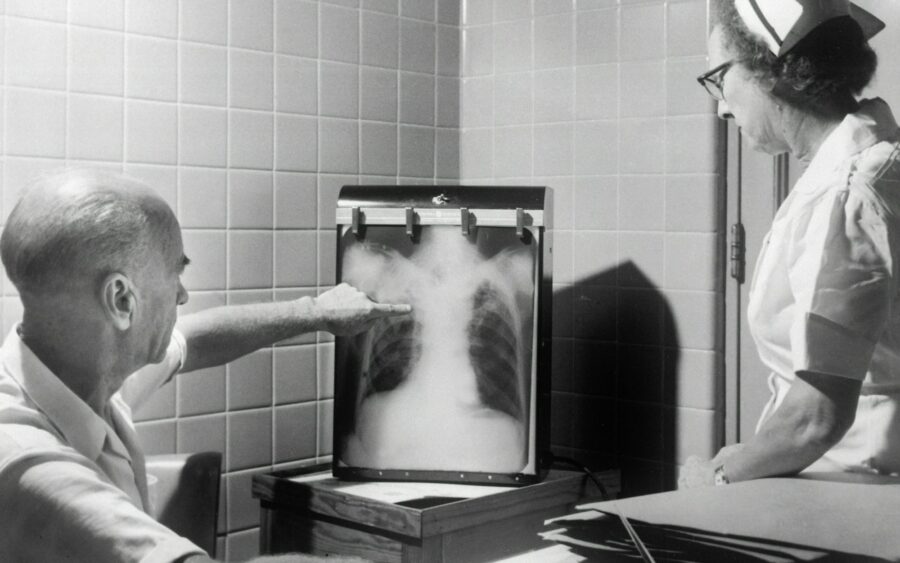
Finding Hidden TB for Less: AI X-Ray Reading Alone Beat Adding a Blood Test
AI software reading chest X-rays on its own found more hidden TB in Lesotho and South Africa, at lower cost, than when a blood test was added. The Swiss TPH-led trial of 20,023 adults, which compared two AI-based strategies, appeared in The Lancet Infectious Diseases.

A Step Toward Talking With Words and Hands Again for People With Paralysis
People who cannot speak could one day talk with words and gestures together, through a single brain implant. A University of California, San Francisco team decoded both at once in two people with paralysis, a proof of concept reported in Nature Neuroscience.
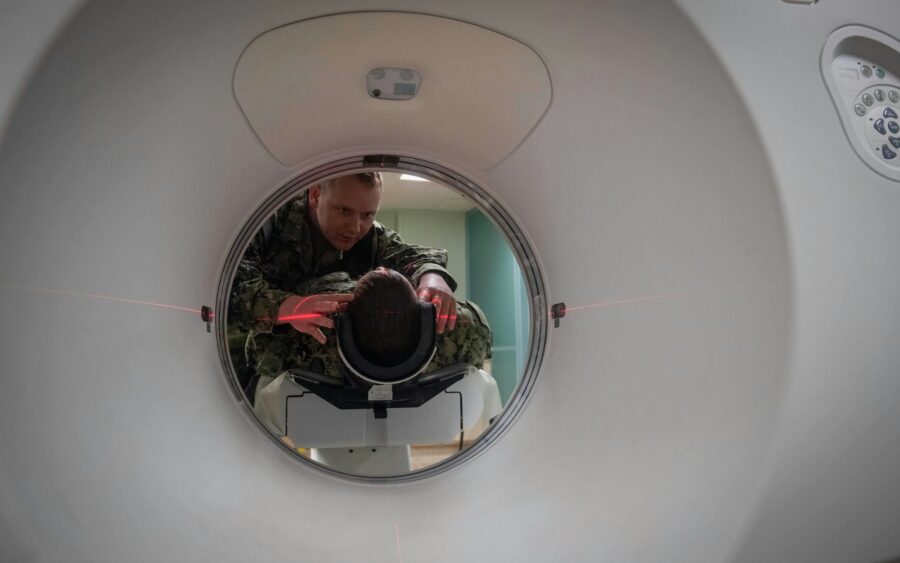
Chest Scans People Already Get Could Help Catch Esophageal Cancer Earlier
The chest CT scans many people already get for other reasons could one day double as a check for early esophageal cancer. A model called EAGLE flagged cancer with 90.0 percent sensitivity at 98.5 percent specificity, validated across 12 centers in three countries; eight authors work for Alibaba.
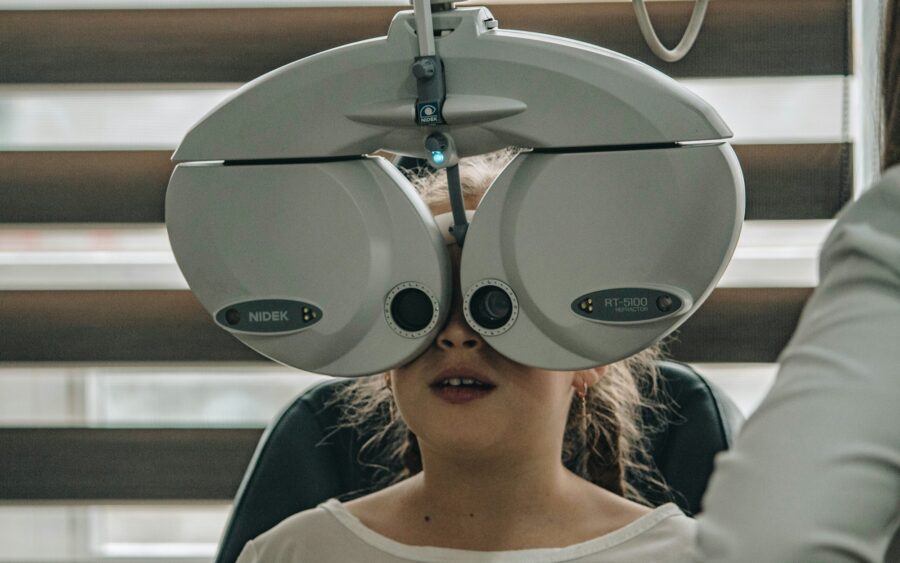
Families With Inherited Eye Disease Could Get to the Right Gene Sooner
People with inherited retinal disease could reach the gene behind their failing sight sooner, with an AI assistant guiding their specialist. In a randomized trial, specialists using it put the right gene in their top five for 88.5 percent of 295 analyzed patients, versus 67.3 percent without it.
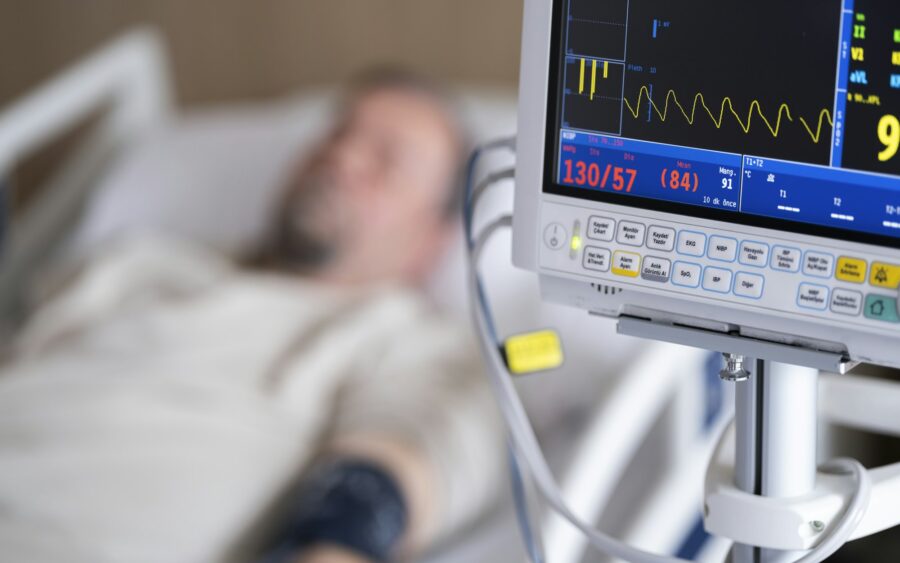
People With Hard-to-Control Epilepsy Could One Day Talk Back to Their Seizure Devices
People whose seizures medication does not control could one day have a device that tells them what it sees and learns from their answers. University of Pennsylvania researchers tested the prototype with 13 hospital patients, and in a simulation their feedback made its seizure detector more precise.
On the tracker
LLM-assisted reanalysis of unsolved rare disease genomes
Eighteen families got an explanation for their child's condition after a language model took a second look at their genome data.
- Field
- Medicine and health
- AI contribution
- Central
- Status
- Retrospective multicohort study complete: 18 new diagnoses in 376 unsolved cases
- Last status change
- June 25, 2026
- Next milestone
- Prospective multicenter evaluation with predefined endpoints and comparator baselines
- Primary source
- NEJM AI
The study was retrospective, and the authors describe the absolute number of new diagnoses as modest. It did not systematically address structural variants, repeat expansions, deep intronic changes or mosaicism on a large scale, although the authors report finding them in a 15 case pilot set, and it did not measure time to diagnosis, cost, interrater agreement or changes in patient management. Four of the authors list OpenAI as their affiliation, and the paper says prompt development and model testing were supported by Boston Children's Innovation and Digital Health Accelerator and OpenAI.
AI diabetic eye screening in Tanzania
People with diabetes in Tanzania were nearly twice as likely to reach an eye specialist when AI read their eye photos and they got results on the spot.
- Field
- Medicine and health
- AI contribution
- Significant
- Status
- Randomized trial complete (ISRCTN18317152); Ministry committed to integrating AI diagnostics into screening in multiple regions
- Last status change
- October 12, 2026
- Next milestone
- Rollout of AI-supported diabetic eye screening in additional Tanzanian regions
- Primary source
- The Lancet Global Health
Even with the AI pathway, most people who needed referral did not reach the clinic within eight weeks (157 of 437 did), and the trial measured clinic attendance, not whether vision was saved. The gain reflects the instant result and the face-to-face counseling together, so the software's own share cannot be separated. The trial was funded by the British Council for the Prevention of Blindness, CBM (Christian Blind Mission) and the Sir Halley Stewart Trust; one author reports equity in Big Picture Medical and consulting fees from several eye-care companies, and the declaration of interests does not mention EyRIS, the AI maker named in the protocol.
BRAVO brain-computer interface trial
People who cannot speak could one day talk with words and gestures together, through a single brain implant.
- Field
- Medicine and health
- AI contribution
- Central
- Status
- Listed as recruiting; trial began November 2018, data for this study collected September 2022 to November 2025
- Last status change
- September 14, 2026
- Next milestone
- Decoding tested in more participants and with larger vocabularies of words and gestures
- Primary source
- Nature Neuroscience
This is three people, and the simultaneous speech-and-gesture work was done in only two of them, using vocabularies of discrete phrases and gestures rather than open-ended language. The paper states the research is not intended to inform conclusions about the primary outcomes of the clinical trial, and the avatar is a laboratory system, not an approved device. In the paper's competing-interests statement, two authors, including Edward Chang, are inventors on pending UCSF patent applications relevant to the decoding methods, and Chang is a cofounder of a neurotechnology company.
EAGLE esophageal cancer screening
The chest CT scans many people already get for other reasons could one day double as a check for early esophageal cancer.
- Field
- Medicine and health
- AI contribution
- Central
- Status
- Published September 22, 2026; validated across 12 centers and 80,612 patients, including a prospective hospital cohort
- Last status change
- September 22, 2026
- Next milestone
- Broader international validation, especially in populations with more esophageal adenocarcinoma
- Primary source
- Nature Medicine
Sensitivity for precancerous lesions was 52.5 percent in external testing, so EAGLE misses about half of them at the high-specificity setting. The authors state that the diversity of training and validation populations requires further expansion and that broader international validation remains essential, especially where distal cancers and adenocarcinoma are more common, and they report sex-based differences in sensitivity that may reflect imbalance in the training data. Nothing here shows that using EAGLE reduces deaths.
Retina4IRD clinician decision support
People with inherited retinal disease could reach the gene behind their failing sight sooner, with an AI assistant guiding their specialist.
- Field
- Medicine and health
- AI contribution
- Central
- Status
- Randomized trial published July 24, 2026; primary outcome met in 295 analyzed patients; the registry lists the trial as completed (February to July 2025)
- Last status change
- July 24, 2026
- Next milestone
- Validation in more populations and imaging setups, and coverage beyond 17 genotype categories
- Primary source
- Nature Medicine
The system predicts only 17 genotype categories, and even assisted clinicians put the right gene first only 37.8 percent of the time. The PAP science service report on the study notes that most of the development data came from Asian populations and that a final diagnosis still requires genetic confirmation. The paper itself is paywalled beyond the abstract, so the figures here come from the abstract, the author list and the trial registry. In the paper's competing-interests statement, senior author Tien Yin Wong discloses consultancies with several companies and patent interests, and one coauthor is affiliated with a commercial retinal-imaging company.
Conversational epilepsy device platform
People whose seizures medication does not control could one day have a device that tells them what it sees and learns from their answers.
- Field
- Medicine and health
- AI contribution
- Central
- Status
- Inpatient prototype validated in 13 patients, reported October 13, 2026
- Last status change
- October 13, 2026
- Next milestone
- Prospective testing beyond the monitoring unit
- Primary source
- Nature Medicine
This is 13 inpatients in a hospital monitoring unit, only 2 of them with intracranial recordings, and the detector improvement came from a pseudoprospective simulation rather than live closed-loop use. Nothing here shows better seizure control or fewer injuries. In the paper's competing-interests statement, three authors, including the first and senior authors, are named inventors on a pending US provisional patent filed by the University of Pennsylvania.

A week of discoveries, one email, every Sunday.
The week's verified discoveries, what moved on the tracker, and one big question answered. If it was a quiet week in a field, we say so instead of filling the space.