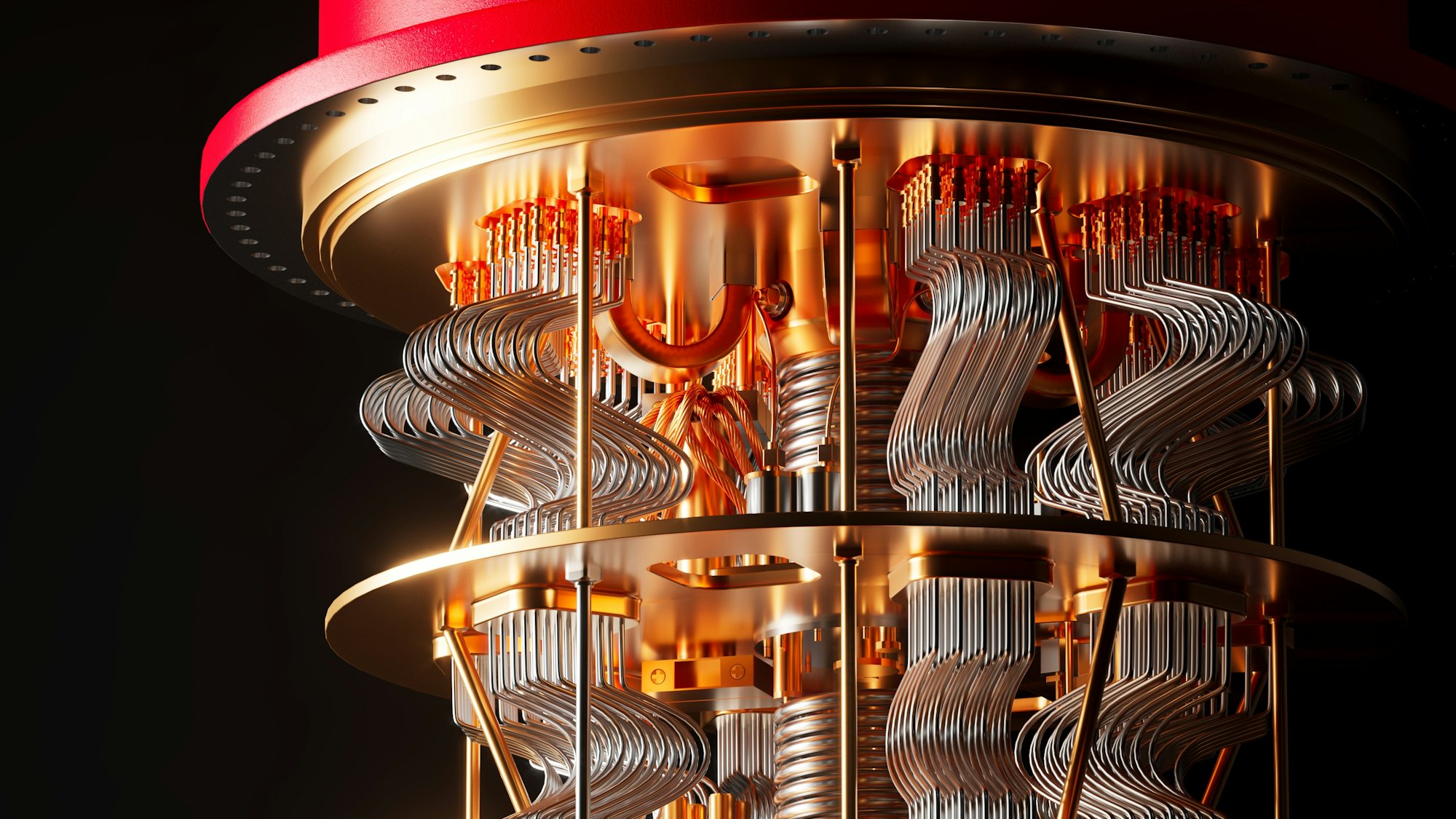
Quantum computing
Quantum machines are learning to correct their own errors and take on their first real problems. What is real, what is next, and what is still a promise.
New in Quantum

Ships Could Find Their Way Without GPS by Feeling Earth’s Gravity
Ships that lose or distrust satellite signals could steer by gravity instead. In a sea trial off Australia, Q-CTRL's quantum gravimeter cut position error about sixfold.
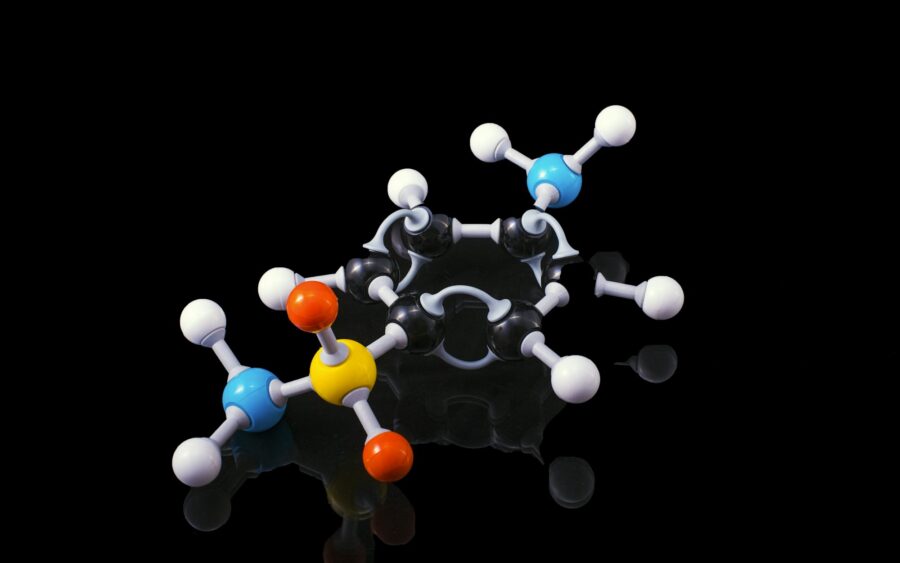
Quantum Computers Could One Day Help Chemists Check the Molecules Behind New Medicines
Chemists checking new drug candidates could one day get help from quantum computers. On 42 qubits, Quantinuum and HQS simulated a hard NMR spectrum whose main features matched the classical answer.
Before We Trust Quantum Answers, Someone Has to Check Them. This Summer Someone Did
If quantum computers are ever going to be trusted with answers people rely on, claims about them have to survive outside scrutiny. IBM's quantum advantage preprint got it: 256 GPUs computed the exact odds of every output it published, and IBM then redesigned the test with the challengers as coauthors.
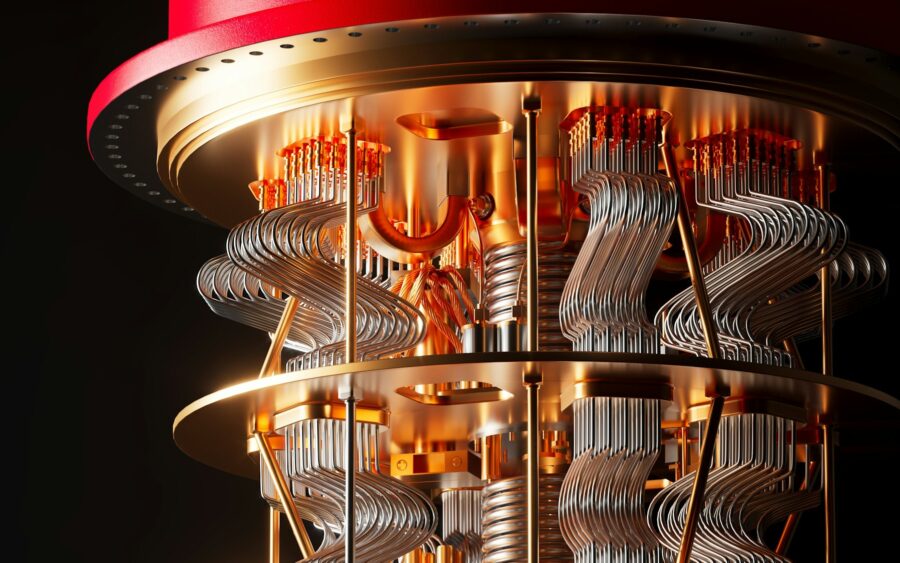
A Chip That Retunes Itself Is a Step Toward Quantum Machines That Could Run for Days
Quantum computers that could one day help design medicines and materials will need to run for days without stopping, and this is a step toward that. A learning agent on Google's Willow chip steered more than 1,000 controls while error correction kept running, using the machine's own error alarms as feedback.
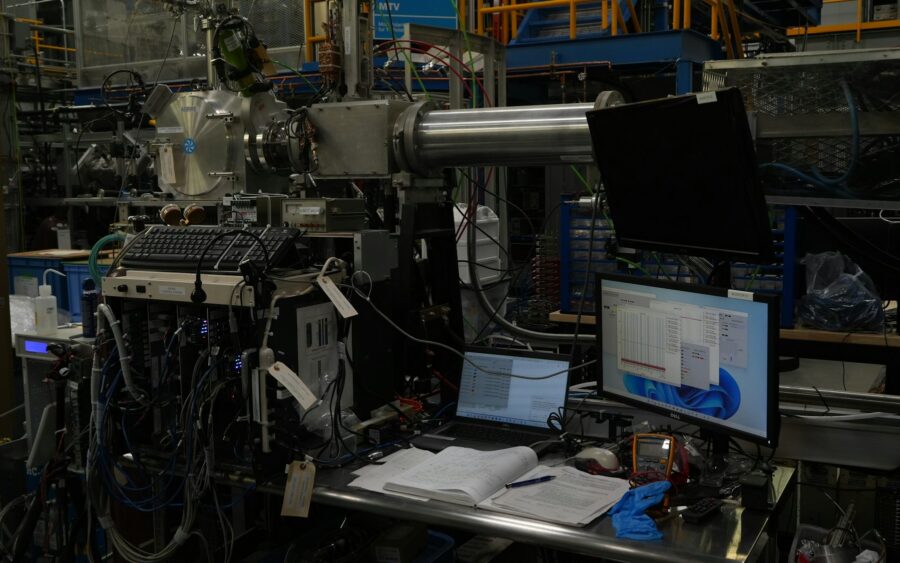
A Decades Old Puzzle Gets a Map, a Step Toward Better Superconductors One Day
Understanding how some materials carry electricity without resistance could one day lead to better power lines, magnets and electronics. A Harvard team used ultracold lithium atoms as stand-ins for electrons and mapped the pseudogap, a strange state at the center of the argument.
Thirteen Trapped Ions Simulate How Particles Can Spring From a Stretched Field of Force
How matter came to exist from raw energy is one of the oldest questions people ask, and a row of 13 atoms just added something to the answer. A Duke-led team watched a toy version of the strong force snap and make particle pairs, first near the string's ends, which is not where the textbook picture puts them.
On the tracker
IBM verifiable quantum advantage (doped Clifford sampling)
If quantum computers are ever going to be trusted with answers people rely on, claims about them have to survive outside scrutiny.
- Field
- Quantum computing
- AI contribution
- Central
- Status
- Original claim classically simulated (Aug 2026); revised periodic-boundary experiment posted Sept 2, 2026 as a preprint
- Last status change
- July 28, 2026
- Next milestone
- Peer review and any classical challenge to the revised 64-qubit circuit
- Primary source
- arXiv
Both papers are preprints and have not been peer reviewed. The revised 64-qubit experiment has not yet faced a published classical challenge, and the task (sampling from specially designed circuits) is a benchmark, not a useful calculation.
Quantum gravity-aided navigation at sea
Ships that lose or distrust satellite signals could steer by gravity instead.
- Field
- Quantum computing
- AI contribution
- Central
- Status
- Six-hour GNSS-free sea trial reported in preprint (Aug 2026)
- Last status change
- August 26, 2026
- Next milestone
- Multi-week GNSS-free navigation and peer-reviewed results
- Primary source
- arXiv
This is a preprint by company scientists, not yet peer reviewed, and the GNSS-free navigation run lasted only about six hours on one coastal route. The authors say multi-week navigation, sharper gravity maps and a smaller system are still needed.
Google Quantum AI: error-corrected Willow processor
Quantum computers that could one day help design medicines and materials will need to run for days without stopping, and this is a step toward that.
- Field
- Quantum computing
- AI contribution
- Central
- Status
- Learning-based control of error correction demonstrated in a memory experiment (Nature, July 2026)
- Last status change
- July 8, 2026
- Next milestone
- Faster agent-to-processor feedback loop and more advanced learning methods, per Google's July 22, 2026 blog post
- Primary source
- Nature
The 3.5-fold stability gain was measured against drift the researchers injected on purpose, not against months of natural drift during a real algorithm. The processor was storing information (a memory experiment), not running a useful calculation, and the large-code results are simulations.


A week of discoveries, one email, every Sunday.
The week's verified discoveries, what moved on the tracker, and one big question answered. If it was a quiet week in a field, we say so instead of filling the space.