A Chip That Retunes Itself Is a Step Toward Quantum Machines That Could Run for Days
Quantum computers that could one day help design medicines and materials will need to run for days without stopping, and this is a step toward that. A learning agent on Google's Willow chip steered more than 1,000 controls while error correction kept running, using the machine's own error alarms as feedback.
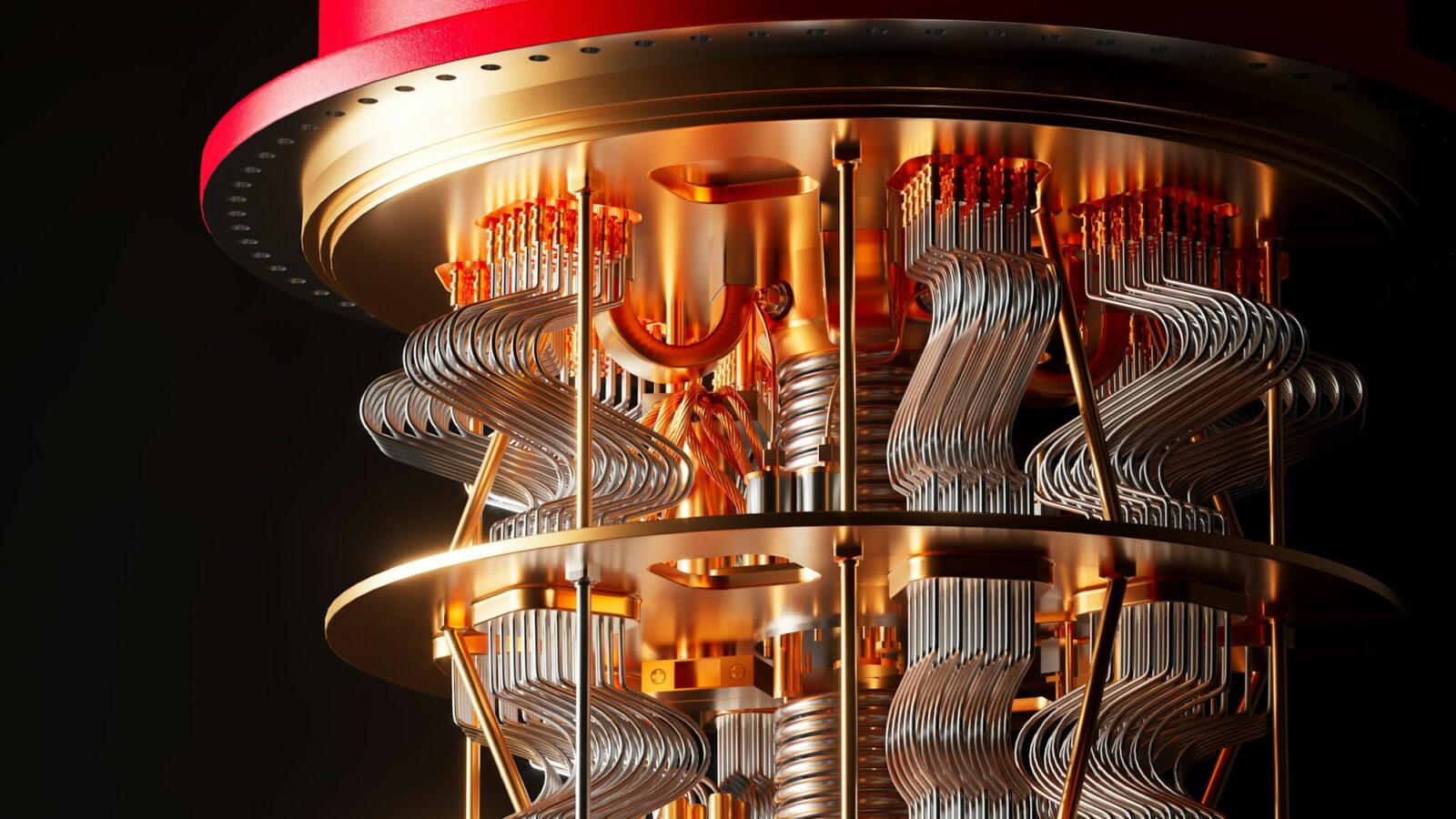
People build quantum computers for problems ordinary machines handle badly: how a molecule behaves, how a material conducts, how a reaction proceeds. Those are the questions behind new medicines and better materials, and the useful versions of those calculations are long. The authors of this work write that future algorithms may need to run continuously for days or even months.
Today’s machines cannot do that, for a mundane reason. Qubits are fussy. The tiny electrical settings that drive them slowly drift out of tune, and the standard fix is to stop the whole computation and recalibrate. Fine for a demonstration. It rules out the long runs that would make a quantum computer worth having.
Google Quantum AI and Google DeepMind have now shown a machine keeping itself in tune while it works. A reinforcement learning agent adjusted more than 1,000 control settings on Google’s Willow quantum processor while the machine went on protecting the quantum information inside it. Nobody pressed pause. The work was published in Nature on July 8, 2026.
The idea at its center is thrifty and rather elegant. Error correction already produces a stream of alarms, called detection events, every time it spots the telltale sign of a mistake. The team gave those alarms a second job as the agent’s teacher. Such an agent learns by trying adjustments and keeping the ones that earn a better score, and here the score came straight from the machine’s own error checks. The parameters it steered decide how an error correction circuit becomes the analog pulses that drive the chip.
The team tested this on surface codes of distance 5 and 7 and on a distance 5 color code. Three results stand out.
- It held steady under deliberate sabotage. The researchers injected drift into the controls on purpose. With the agent steering, stability of the logical error rate improved 2.4-fold compared with fixed controls, and 3.5-fold when the agent also steered the decoder, the software that interprets the error signals.
- It improved on careful hand calibration. On a processor experts had already calibrated, fine-tuning by the agent gave about 20 percent further suppression of the logical error rate, across multiple runs on the distance 5 versions of both code types.
- It set records for these codes. Putting its improvements together, the team reports an average logical error per cycle of 7.72 × 10⁻⁴ for the distance 7 surface code and 8.19 × 10⁻³ for the distance 5 color code, which the authors describe as record performance. The surface code record leans on AI a second time: it was decoded with AlphaQubit2, a neural network decoder. The color code figure used a conventional decoder called Tesseract.
One more result answers the obvious worry. Any calibration method that slows down as machines grow would eventually choke, and growing is the whole plan. The team ran simulations of much larger codes, with tens of thousands of control parameters, and found the agent’s optimization speed did not depend on system size.
Be clear about what was and was not shown. The distance from here to a medicine is long. The sharpest stability gains were measured against drift the researchers added themselves, not months of natural drift. The processor was storing information rather than running a useful calculation, and the large-code results are simulations. Nobody designed a drug here.
What changes is nearer and more modest: the people who work on these machines spend less time fighting the instrument. Anyone who has babysat a long lab run overnight knows that feeling, and what it would mean to get those hours back. The authors’ summary of where they are headed is the last line of their abstract:
a quantum computer that learns from its errors and never stops computing. Sivak, Morvan et al., Nature (2026)
In Google’s research blog post, the team says the next steps are to speed up the communication between the agent and the processor and to try more advanced machine learning methods. A tighter conversation between a chip and the thing tuning it is not a headline anyone will shout about. It is how a machine gets from minutes to running long enough to answer a question somebody actually asked.
Sources
- Reinforcement learning control of quantum error correction
- Towards a quantum computer that learns from its errors
- Reinforcement Learning Control of Quantum Error Correction (preprint)
Every claim in this story was checked against these sources on October 15, 2026. Spot something wrong? Tell us and the correction will be dated on this page.