Recorders That Know a Bee’s Buzz Could Help Track Pollinators Without Harming Them
Recorders that recognize a bee's buzz could help scientists track honey bees and bumble bees without trapping them. A UMass Amherst-led team built two listening models, now available in the Raven Pro sound software.
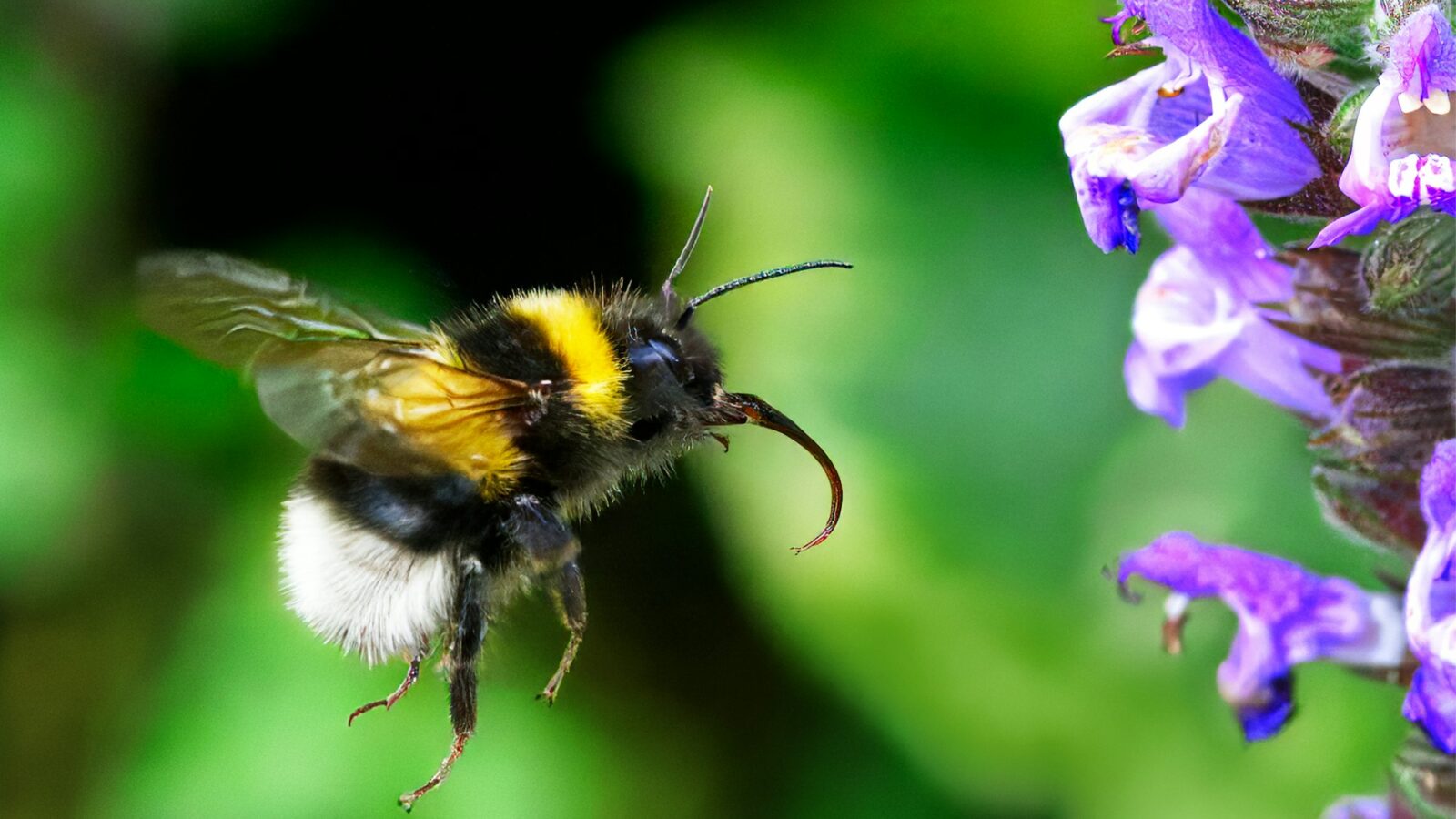
Here is how scientists have long counted bees. They set out small colored cups of soapy water, and the bees that land in them drown. It works, and it is a strange way to look after an animal you are worried about. According to the University of Massachusetts Amherst, lethal traps can kill tens of thousands of bees in order to get an accurate count, and they catch plenty of other insects nobody meant to count.
Laura Figueroa, an assistant professor of environmental conservation at UMass Amherst, figured her own ears were the clue.
“I’ve been working with bees for over a decade and can tell a bumble bee from a honeybee in the field by sound. If my brain can easily distinguish between bee categories, then we should be able to train an AI model to do it, too.”Laura Figueroa, UMass Amherst, in the university’s release
Software that knows a bumble bee by ear
Figueroa and colleagues at UMass Amherst, Cornell University, Oregon State University, the University of Zagreb and Curtin University built two listening models (convolutional neural networks, the same family of pattern finders used on photos, here pointed at sound). They trained them on 594 field recordings collected over five years at 43 sites, across a broad range of habitats and background noise. The university says the sites were spread across the northeastern U.S.
The first model listens for bee activity in general: flight buzzes, the vibrating buzz bumble bees use on flowers (sonication), and foraging sounds from other species such as the eastern carpenter bee. The second sorts what it hears into honey bee flight, bumble bee flight and bumble bee sonication. The work was funded by the U.S. Department of Energy’s Office of Energy Efficiency and Renewable Energy, according to the publisher’s record. The paper was published online October 12 in Approaches in Entomology: Methods, Philosophies, and Ethics.
Checked against people who already knew
The team tested the models against trained observers watching the same sites, which is how you learn to trust a tool before you lean on it. Model detections of overall bee activity, and of honey bee and bumble bee activity, were strongly correlated with what the observers counted. At a confidence threshold of 0.9, both models reached 93 to 97 percent precision. In plain terms: when a model said “bee,” it was almost always right. That number is about how far you can trust each detection, not about how many of the bees out there got found. (The university’s release words it as identifying 93 to 97 percent of the bees in a sample; the paper reports it as precision.)
The trade sits on the other side of the ledger. Recall ran 13 to 44 percent, so the models let plenty of buzzes go by. That is a trade the authors made on purpose, putting reliable detections ahead of catching every one. Most detections came from within 50 centimeters of the recorder, so each microphone hears a small patch of ground.
Who gets something out of this
Pollinators provide ecosystem services estimated at well over $200 billion worldwide, the university notes, and they are critical for the reproduction of most plant species. Many pollinators, bumble bees included, have been in steep decline. Anyone trying to tell whether a conservation strategy is actually helping needs numbers they can repeat season after season, and a recorder left in a field gives them a steady measure of bee activity without killing a single bee.
Figueroa does not oversell it. Lethal traps will stay important, she says, because many bee species can only be identified under a microscope. The recorders earn their place where people struggle to sample, “for example in tree canopies or during heatwaves,” as she put it. And nobody has to build anything to try them: both models are already available in Raven Pro, an acoustic analysis tool scientists use to study animal activity.
The next real step is simple and doable now. Field teams can set recorders beside their usual surveys and see how the two counts line up in their own meadows, orchards and woods.
Sources
- What's all the buzz about? Passive acoustic monitoring of bees
- Crossref metadata record and abstract for DOI 10.1002/3070-5436.70006
- Listening to the Buzz: UMass Amherst Ecologist Develops New Tool for Monitoring Bee Populations
- AI listens to bee buzzes to monitor activity without lethal traps
Every claim in this story was checked against these sources on October 22, 2026. Spot something wrong? Tell us and the correction will be dated on this page.