Ai Drew a Map of 2.2 Million Possible Crystals, and Scientists Are Learning to Read It
Better batteries, solar cells and chips all start with new materials, and researchers now have a free map of likely ones. Google DeepMind's GNoME proposed 2.2 million crystals in 2023; a robot lab's follow up has since been corrected.
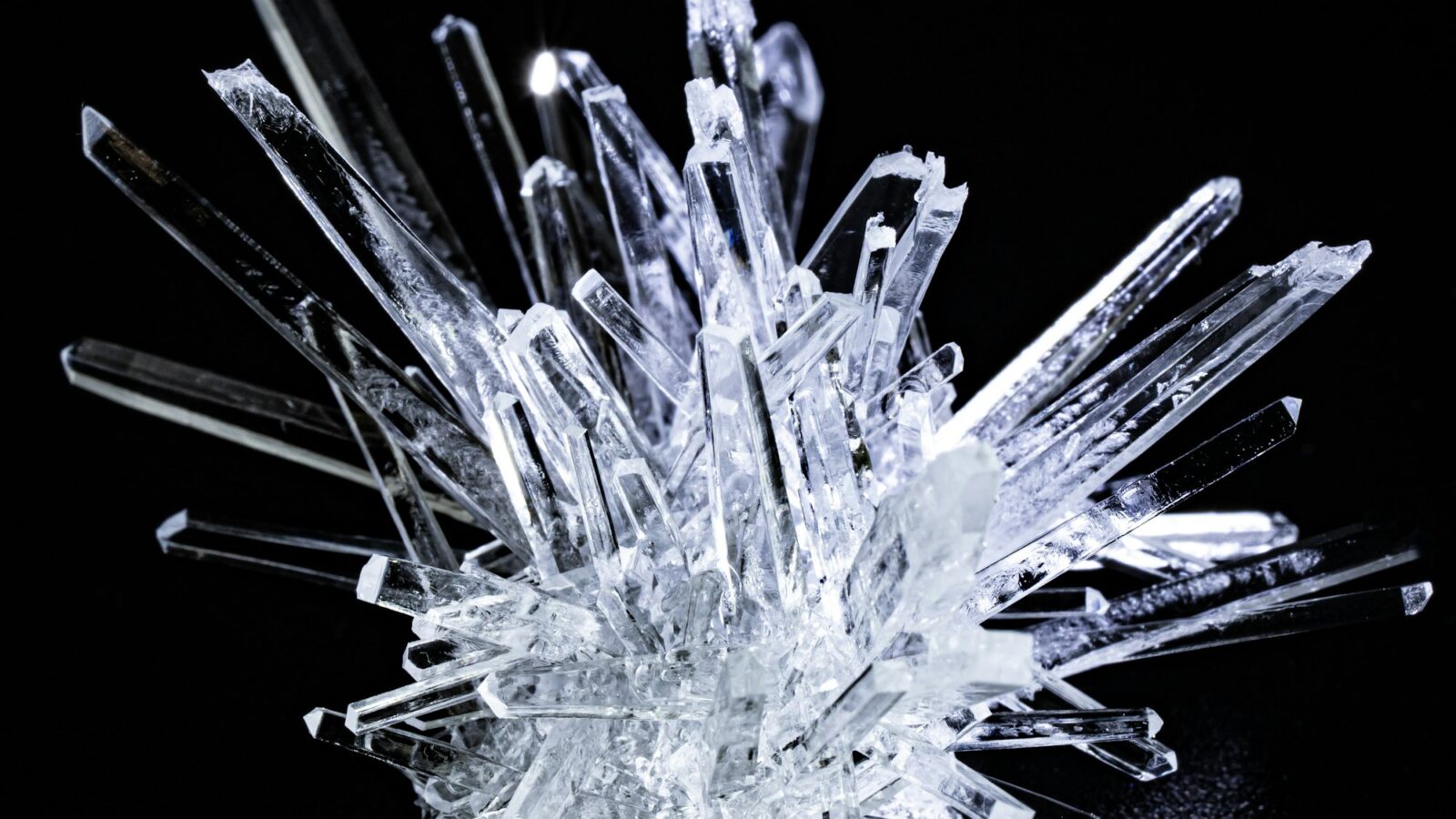
Almost every leap people have made, from bronze tools to the phone in your pocket, started with a new material. The trouble is that finding one is slow. A chemist can spend years mixing, heating and testing a single recipe of atoms, and most recipes never hold together at all. That is why a 2023 project from Google DeepMind still circulates on social media this year, often with bigger numbers attached than the research supports. Here is what it actually found, and why it is still good news.
What happened
In November 2023 Google DeepMind published a paper in Nature describing GNoME, a deep learning model trained on known crystals. It proposed 2.2 million crystal structures that its calculations placed below the line chemists use to judge whether a material should be stable. After the new structures were added, 381,000 of them sat on the updated stability line, the strongest candidates to actually exist. DeepMind released those 381,000 to researchers through the Materials Project, a free public database run from Lawrence Berkeley National Laboratory, and called the haul equivalent to nearly 800 years of knowledge. That figure is the company’s own comparison, not a measurement.
The same day, a team from UC Berkeley and Berkeley Lab published a second Nature paper on the A-Lab, a robotic lab that plans recipes, mixes powders, heats them and reads the results with little human help. Working from targets drawn from the Materials Project and DeepMind data, it originally reported 41 new compounds from 58 targets in 17 days.
How the AI helped
GNoME did the part people cannot do at this scale: it guessed which arrangements of atoms would hold together, then checked its guesses with standard physics calculations and learned from the results. In the A-Lab, machine learning planned the cooking recipes and read the X ray patterns that tell scientists what came out of the furnace. DeepMind says outside researchers had independently made 736 of its new structures in their own labs.
What the viral version gets wrong
Scientists pushed back, and the record changed. Chemists at Princeton and University College London reviewed the A-Lab results in PRX Energy in 2024 and argued that no new materials had been discovered, saying many products looked like disordered versions of compounds already known. A second review in Chemistry of Materials found the GNoME methods promising but saw scant evidence yet of compounds that are new, credible and useful all at once. In January 2026 the A-Lab authors published a correction in Nature. They now count 36 successes from 57 targets, set aside 4 results their X ray data could not settle, and say new meant new to their prediction platform, not necessarily new to science. So the robot lab did not make 41 never imagined materials, and nobody has yet put a GNoME crystal into a battery you can buy.
Why it matters
The honest version is still a big deal. Researchers anywhere now have a free list of hundreds of thousands of likely stable crystals to start from, instead of guessing. DeepMind flagged 528 candidates that could carry lithium ions, a starting point for better rechargeable batteries, and 52,000 layered compounds similar to graphene. The argument over novelty is science working the way it should: bold claims, careful critics, and a corrected paper. For the people who will one day drive the cars, run the grids and use the chips these materials might improve, a faster, more honest map is the real win. Google DeepMind said in December 2025 that it would open an automated materials lab in the UK in 2026, with robots meant to make and test hundreds of materials a day. That is the next test of whether the map leads somewhere.
Sources
- Scaling deep learning for materials discovery
- An autonomous laboratory for the accelerated synthesis of inorganic materials
- Author Correction: An autonomous laboratory for the accelerated synthesis of inorganic materials
- Challenges in High-Throughput Inorganic Materials Prediction and Autonomous Synthesis
- Artificial Intelligence Driving Materials Discovery? Perspective on the Article: Scaling Deep Learning for Materials Discovery
- Millions of new materials discovered with deep learning
- Strengthening our partnership with the UK government
Every claim in this story was checked against these sources on November 21, 2026. Spot something wrong? Tell us and the correction will be dated on this page.