Materials Lost for Decades Could Help Clean Water and Store Power
A search by AI through old science papers found materials chemists had already made and lost track of. Researchers in Sweden used the find to make eleven new versions that could one day help purify water, store energy and build better electronics.
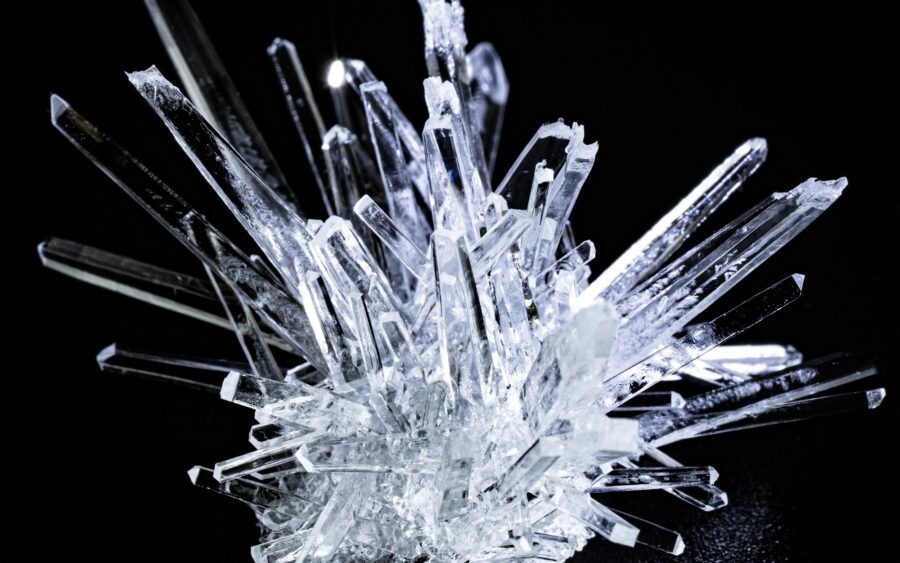
Materials scientists have a particular, slightly embarrassing problem: with millions of papers already published, nobody can read them all, so a useful material sometimes gets made once, written up, and then forgotten. Some of the two-dimensional materials called MXenes, thin metallic sheets only a few atoms thick now studied for batteries and water filters, trace back to crystal precursors that chemists made as early as the 1970s, before anyone had the microscopes or the theory to know what they were holding.
Johanna Rosén, a materials physicist at Linköping University in Sweden, decided to have a machine do the rereading instead.
What happened
Rosén’s team, working with collaborators in Estonia and Finland, used machine learning to search decades of published chemistry and materials literature for crystal structures matching the MXene pattern. The search, published in the journal Science, turned up 33 MXene compounds that had already been made and described in old papers, then filed away and forgotten because nobody had connected them to today’s two-dimensional materials research.
The team did not stop at finding the old ones. Using what the AI search had surfaced about which chemical combinations tend to work, the researchers went on to make 11 brand-new MXenes built around rare earth elements, including praseodymium, neodymium, samarium, gadolinium, terbium, holmium and thulium, in forms nobody had made before.
How the AI helped
The AI’s job was narrow but exactly the kind of thing a person cannot do at scale: read an enormous pile of old scientific literature and flag crystal structures that matched the MXene pattern, even when the original authors had no idea they were looking at one. “There’s so much information in the literature that we’re not aware of,” Rosén said. “We need to look both backward and forwards to accelerate materials science.”
With a list of candidates in hand, the team built a fast, self-propagating reaction that needs no outside heat and finishes within minutes, using fewer hazardous chemicals and less water than the usual methods for making these materials. They used it to actually make seven of the 33 historical candidates, confirming they are real, then pointed the same recipe at new rare earth combinations to produce the 11 new MXenes. Several of the new ones turned out to be magnetic, a property most MXenes lack.
Why it matters
MXenes already show up in early work on water filters, batteries and data storage because their huge surface area and metal-like conductivity make them unusually useful for materials this thin. A faster, cleaner, less toxic way to make them, found partly by having a machine reread fifty years of somebody else’s old lab notebooks, could eventually matter to anyone who drinks water filtered through one or charges a phone with a battery built from one. The magnetic versions open a newer and less explored door, toward smaller, denser data storage and electronics where a material needs to hold both a magnetic and an electronic personality at once.
None of these materials are in a filter or a battery yet. But a method that can comb through fifty years of forgotten chemistry in a fraction of the time it would take a person, and come back with both old answers and new ones, is the kind of head start that lets engineers skip the decades scientists spent not knowing what they already had.
Sources
- Data-driven discovery and rapid, direct synthesis of MXenes
- Data-driven discovery and rapid, direct synthesis of MXenes (preprint)
- AI helps uncover overlooked 2D materials and create 11 new ones
- AI uncovers lost 1970s materials to boost next-generation green tech
Every claim in this story was checked against these sources on November 1, 2026. Spot something wrong? Tell us and the correction will be dated on this page.