Iron Made Entirely From Scrap, Impurities and All, Comes Out Stronger and Cheaper
Foundries could one day cast strong iron out of 100 percent scrap, and stop buying fresh mined metal just to dilute it. A team in China and Germany used machine learning to design ductile iron that puts the impurities in scrap to work.
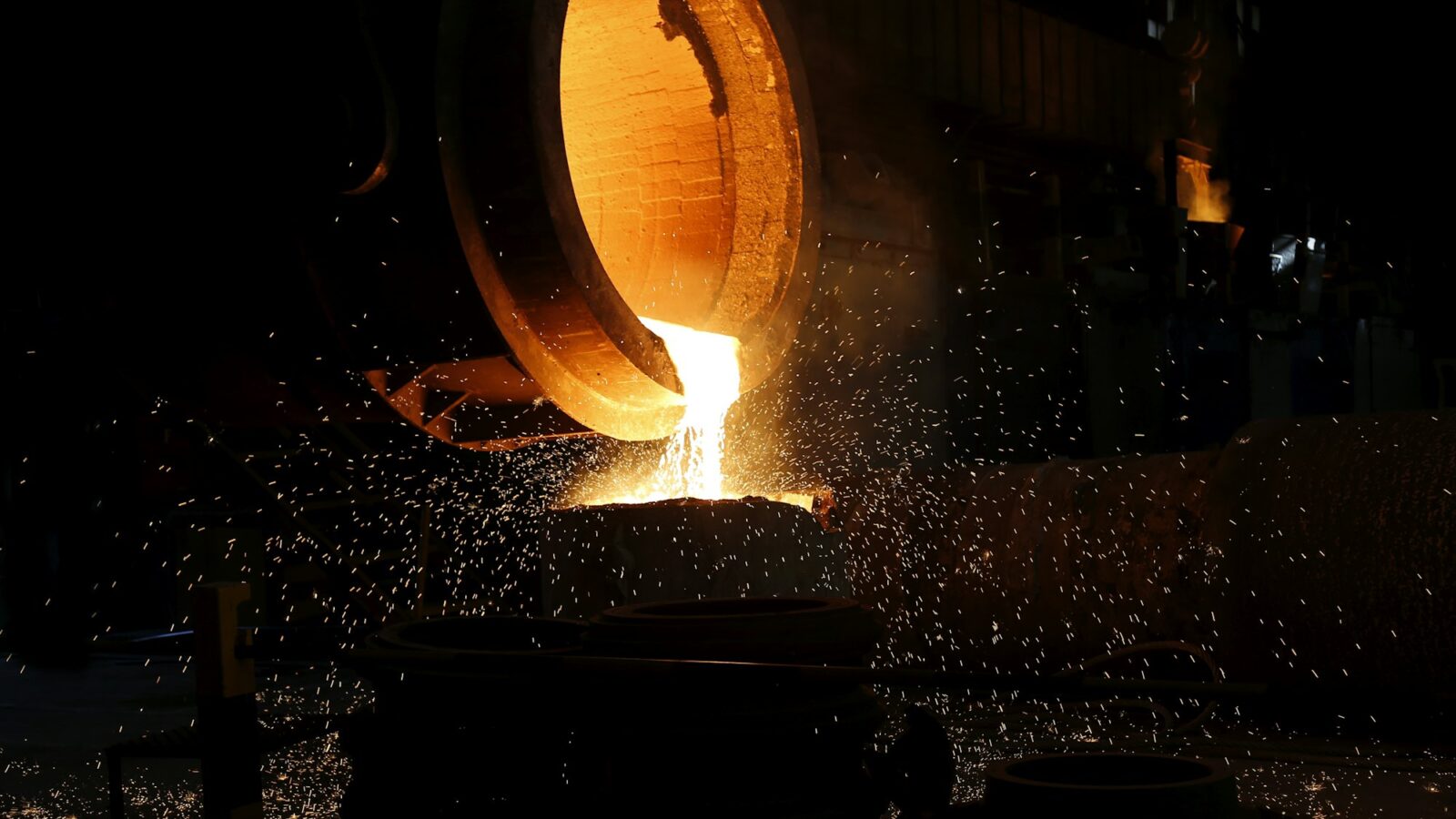
Here is a habit worth saying out loud, because it sounds strange once you do. Foundries buy clean, newly mined metal and mix it into their scrap, to water down the junk in the scrap. The world makes more than 2 billion metric tons of metal and alloys a year, and the mining behind that output causes about 40 percent of all industrial greenhouse gas emissions and 10 percent of global energy use, according to a new paper in Science Advances.
The habit has a reason behind it. Old cars, turnings and worn castings melt down into a chemically unpredictable mix, and the stray elements in it usually make the finished metal brittle, so dilution is what metalworkers have long done about it. For ductile iron, a workhorse cast metal, the paper notes that conventional design runs into a wall once scrap passes about 70 percent of the charge. The product stays strong, and much of the point of recycling drains away.
Making the impurities part of the recipe
A team from Shanghai Jiao Tong University, City University of Hong Kong, East China University of Science and Technology, Central South University, Suzhou National Laboratory and the Max Planck Institute for Sustainable Materials in Germany tried the opposite. In the paper, published online October 14, 2026 (in the issue dated October 16), they design iron from 100 percent scrap that lives with its contaminants instead of scrubbing them out. Their method, they write, “deliberately reverses a five-millennia-old metallurgical injunction.”
The stakes are large. Ductile iron accounts for about 28 percent of global cast iron consumption, roughly 120 million tons a year, the authors report.
A search through recipes nobody had tried
The hard part is the search. Nudge the recipe, or the heating temperatures and times, and strength and stretchiness tend to move in opposite directions. The team’s framework works like this:
- A tree-search algorithm starts from the best existing designs and generates new candidates by varying composition and processing settings.
- Neural networks predict each candidate’s tensile strength and its elongation, meaning how far it stretches before it breaks, steering the search toward better combinations of the two.
- A second model, trained on a larger dataset of about 2,400 compositions and properties, screens the shortlist, and each round of experimental results goes back in to retrain the models.
Then came the casting, on an automated production line using scrap as the only raw material. The team made 17 designs picked by the framework, and 14 beat the best strength and ductility combinations in their existing recycled-iron dataset; two fell short of what the models expected. Depending on the design, tensile strength rose by up to 15.2 percent, or elongation at fracture by up to 73.2 percent. Using scrap alone cut overall costs by 8.1 percent, the paper reports.
“We therefore developed a new machine-learning strategy that turns these impurities from a problem into an advantage,” Liuliu Han, partner group leader, Max Planck Institute for Sustainable Materials, in a Max Planck Society release
Old enemies, new ingredients
Metallurgy has spent thousands of years treating impurities as the enemy. This work treats them as ingredients the recipe had not yet learned to use, and hands a model the tedious job of working out how.
Nobody will notice this at the hardware store next month. It is one peer reviewed study of one alloy family, made on one production line. Still, the people it could reach are easy to picture: foundry owners who buy new metal just to tame their own scrap, workers on those casting lines, and communities living beside mines and smelters who would welcome a little less demand for fresh ore. The authors say the framework itself is not tied to iron, and the Max Planck Society release mentions recycled steels, aluminum and copper alloys as possible next targets. If that holds, the scrap pile behind a factory starts to look less like a problem to dilute and more like a pantry.
Sources
- From scrap to prime: Designing high-performance alloys from dirty feedstocks with machine learning
- From scrap to prime (open-access full text)
- AI turns scrap impurities into useful ingredients for stronger recycled iron
Every claim in this story was checked against these sources on October 18, 2026. Spot something wrong? Tell us and the correction will be dated on this page.