Old Melodies Locked in Medieval Chant Books Move a Step Closer to Singers
Chant melodies written out by hand in monastery books could become far easier for scholars, and one day singers, to find and read. A preprint from the Austrian Academy of Sciences built 30,567 lines of training data, and its reading model got 9.6 percent of musical symbols wrong.
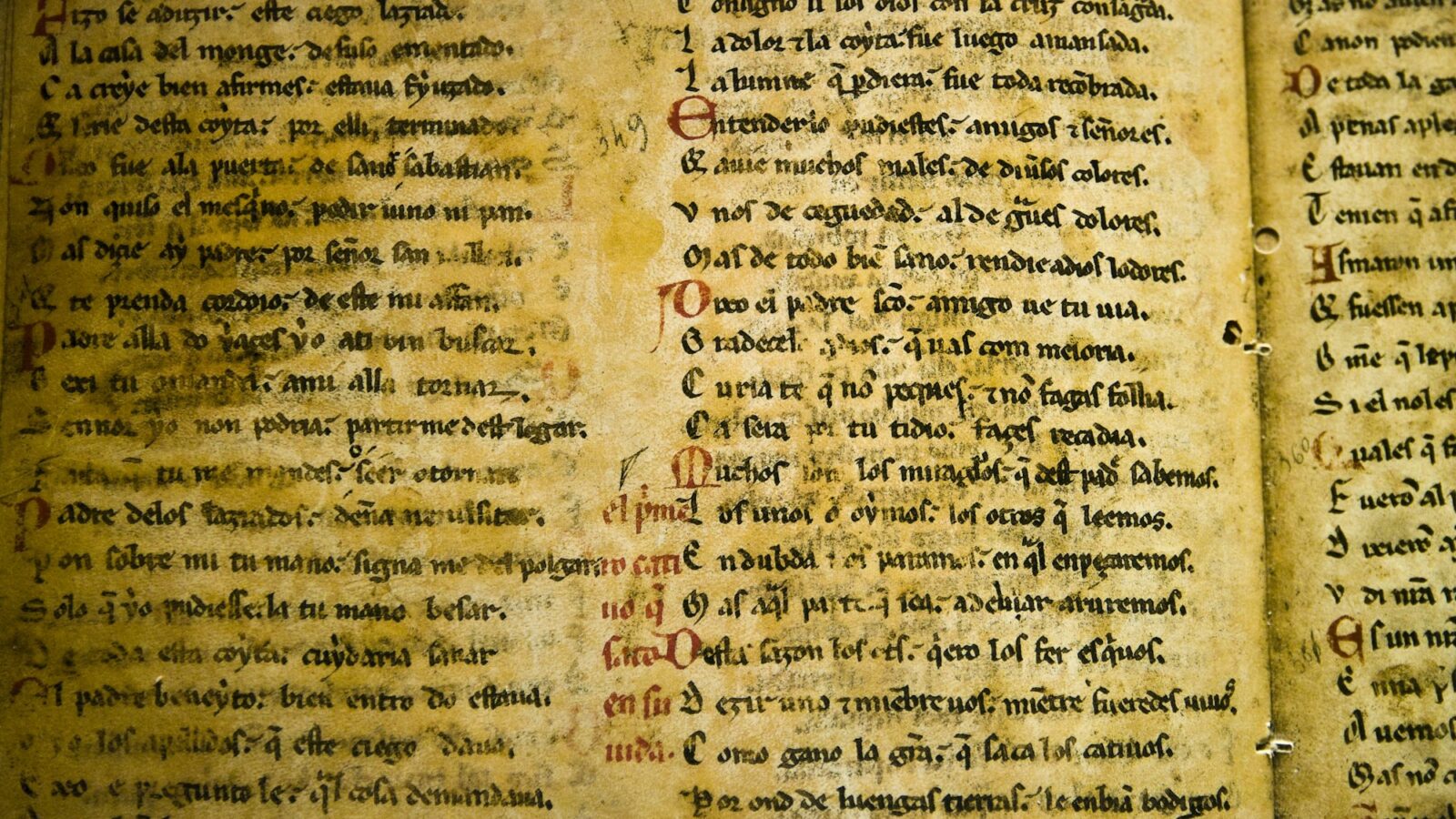
In the 1100s a scribe in a religious house drew staff lines on a page, marked a clef, and set down a melody in tiny strokes so the community could sing it. Many such books survive in Europe’s libraries, and many have been photographed and put online. A photograph cannot be searched, compared or played back until somebody reads every note.
A preprint posted to arXiv on October 12, 2026 by Robert Klugseder of the Austrian Academy of Sciences (ACDH) in Vienna takes a real step toward handing that reading to a machine. It builds 30,567 training examples, each a photographed line of chant paired with its notes, and trains a model that reads them with far fewer errors than the one he started with.
Where did 30,000 lines of answers come from?
Teaching a model to read music needs pictures paired with correct transcriptions, and making those by hand is slow and costly. Klugseder’s insight was that much of the work already existed. The Cantus Database, a research catalog of chants and chant sources, holds melody transcriptions in a simple text code called Volpiano. His copy, dated 16 February 2026, had Volpiano for 57,085 chants with links to images. The hard part was lining each transcription up with the right stretch of the right page, inferring the clefs, and checking for omissions and melodic variants.
What did the AI do?
Quite a lot. When simple rules found only about 52 percent of the staves an expert had marked by hand, two small neural networks learned the job from his annotations instead: one learned staff positions from 235 hand-drawn examples on 23 pages and then found 118 of 124 in material it had not seen. The other learned the letters scribes wrote in the margin to fix the pitch. Then a reading model, a convolutional recurrent neural network, was trained from scratch on the finished lines.
On 3,086 test lines it made errors on 9.6 percent of musical symbols. An earlier model, trained mainly on Austrian sources of the 15th and 16th centuries, scored 45.3 percent on the same lines, though the paper notes the two models use different symbol sets, so the comparison is partly about fit with the new labels. On three manuscripts it never saw in training, the new model’s error rate was 21.5 to 31.0 percent. It also helped rescue 2,686 lines the pipeline had first set aside.
Klugseder writes that he built the pipeline with an AI coding assistant, Anthropic’s Claude, which worked largely autonomously on code, detectors and training, while he supplied the chant expertise, paleographic readings and annotations, and decided which labels to accept.
Whose books are these?
The ten sources run from the 12th to the 15th century. Three came from the Augustinian canonesses of Klosterneuburg. Others belonged to the Cistercian abbey of Rein, the Benedictine abbeys of Einsiedeln, Zwiefalten and Saint-Maur-des-Fossés, and several houses whose names are lost. Together they span notation styles that, the paper says, are not yet fully represented in training data for music recognition.
Who could this help?
Chant historians first, who could one day trace how a melody traveled from one abbey to another without transcribing every page by hand. Later, perhaps, choir directors and curious listeners looking for a tune their own region sang centuries ago. It is not a finished tool for them yet, and the error rate on hands the model has never seen says so plainly. But every one of those lines is a short stretch of music that a religious community once sang, some of them from the books of the canonesses of Klosterneuburg, and somebody is going to sing them again.
Sources
- From Volpiano to Pixels: 30,000 Lines of OMR Ground Truth for Medieval Chant
- From Volpiano to Pixels (full text PDF)
- Cantus Database
Every claim in this story was checked against these sources on October 18, 2026. Spot something wrong? Tell us and the correction will be dated on this page.