Newborns on Breathing Tubes Could One Day Get an AI Check Made for Them
Newborns could get the same automatic breathing tube X-ray check that adults already have, from a model that learned across 30 newborn ICUs. No hospital had to share a single image: the model traveled instead. Harvard-led researchers report the study, which used X-rays already taken, in Nature Biomedical Engineering.
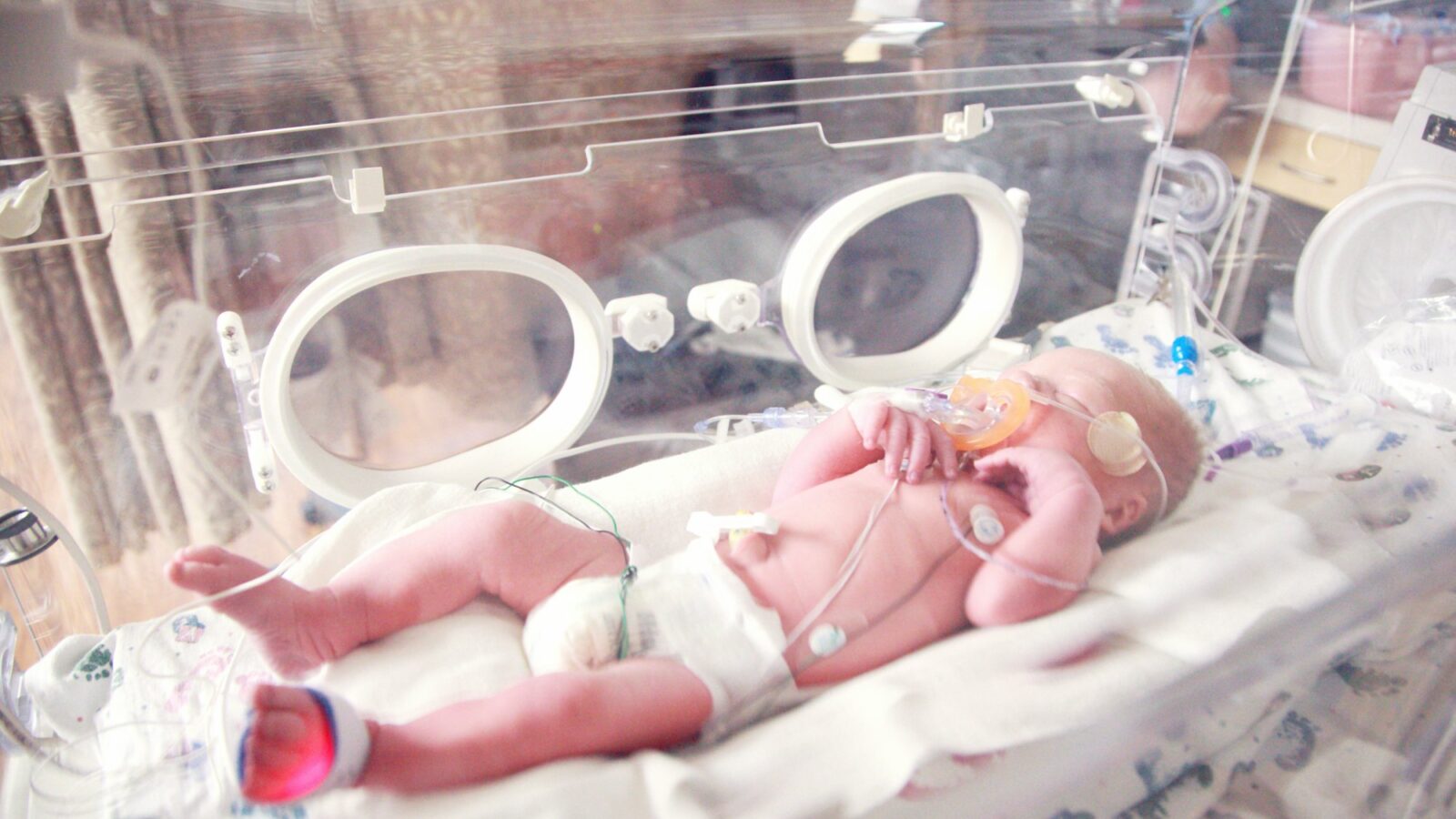
A baby born weeks early is struggling to breathe, and a doctor slides a tube into the tiny airway. Then comes a chest X-ray to check where the tip landed. In a newborn, the paper notes, there is little margin for error: a tube pushed too deep can end up ventilating just one lung, or let a lung collapse. A false alarm has costs too, because pulling and replacing a tube carries its own risks.
Adults already have help with that reading. Several AI tools that check breathing tube position on adult X-rays have been cleared by the FDA. For newborns, according to the new study, there are no commercial options at all.
A team led from Harvard Medical School, with first authors Vishwanatha Rao, Emma Chen and Agustina Saenz and senior author Pranav Rajpurkar, set out to change that without asking a single hospital to hand over its babies’ images. Their results appeared October 13 in Nature Biomedical Engineering.
The puzzle: children are not small adults
Medical AI mostly learns from grown-ups. Only 17% of commercial models have FDA approval for use in children, and children make up less than 1% of public medical imaging datasets, the authors write. Pediatric images are also hard to pool, because privacy rules keep them inside each hospital. As co-first author Rao put it in a German-language release from the University of Duisburg-Essen, one of the participating institutions, children are not small adults, and that is exactly why they need AI made for them.
How the model traveled
The team took an existing model trained on adult intensive care X-rays and passed it from hospital to hospital, like a notebook handed around a class. Each neonatal intensive care unit retrained it on just 50 of its own X-rays, then sent the updated model, not the pictures, on to the next site. The authors call this continual learning. It is the kind of fix a working person comes up with rather than a committee: if the data cannot move, move the student instead.
The test spanned 30 NICUs in 20 countries and territories: 2,965 chest X-rays from 2,960 babies, imaged at a median age of 2 days, with a mean gestational age of 32.9 weeks.
- The adult model, used as is, had a combined error of 4.30 cm in locating the tube tip and the carina (where the windpipe splits).
- Retraining at a single hospital brought that to 1.29 cm.
- The traveling model got it down to 0.67 cm, and located the landmarks better at 29 of 30 sites.
- It also improved at catching tubes placed too deep at 27 of 30 sites, a statistically significant gain at 18 of them.
Two honest asterisks. The study looked back at X-rays already taken, so no baby’s care was guided by the model. And the hand-offs were simulated, with only model weights passed between steps, so the authors say the method still needs a real run across separate hospital computers. They also note that in the most premature babies the safe margin is even narrower, so testing in that group will be essential.
Who could feel the difference
The authors picture a model that flags worrying X-rays at the bedside and sends them to the front of a radiologist’s queue, which could shorten the wait for confirmation in the most critical cases. Clinicians often read these X-rays during the first assessment, the authors note, and less experienced readers are more likely to misjudge where a tube sits.
The approach also lowers the bar for joining in. A hospital does not need a big dataset or its own AI team, only 50 labeled images. The team has posted the trained model and code publicly on GitHub, so a NICU anywhere could, in principle, pick up the notebook and add a page of its own.
Sources
- Repurposing adult AI radiograph models for neonatal care through continual learning: an international multicentre study
- KI in der Kindermedizin: Forscher:innen schließen Datenlücke ohne Datenschutzverletzungen
- MAIDA-NICU-continual-learning (model weights and code)
Every claim in this story was checked against these sources on October 18, 2026. Spot something wrong? Tell us and the correction will be dated on this page.