Help Could Reach Hungry Kenyan Children Sooner as Forecasts Join Drought Warnings
Kenya's drought agency now uses machine learning forecasts of child malnutrition, aiming to get help to families before hunger peaks. The method, from UC Berkeley, Cornell, IFPRI, the agency and the US Census Bureau, was published in PNAS in 2025; what is new is its use in Kenya's early warning system in 2026.
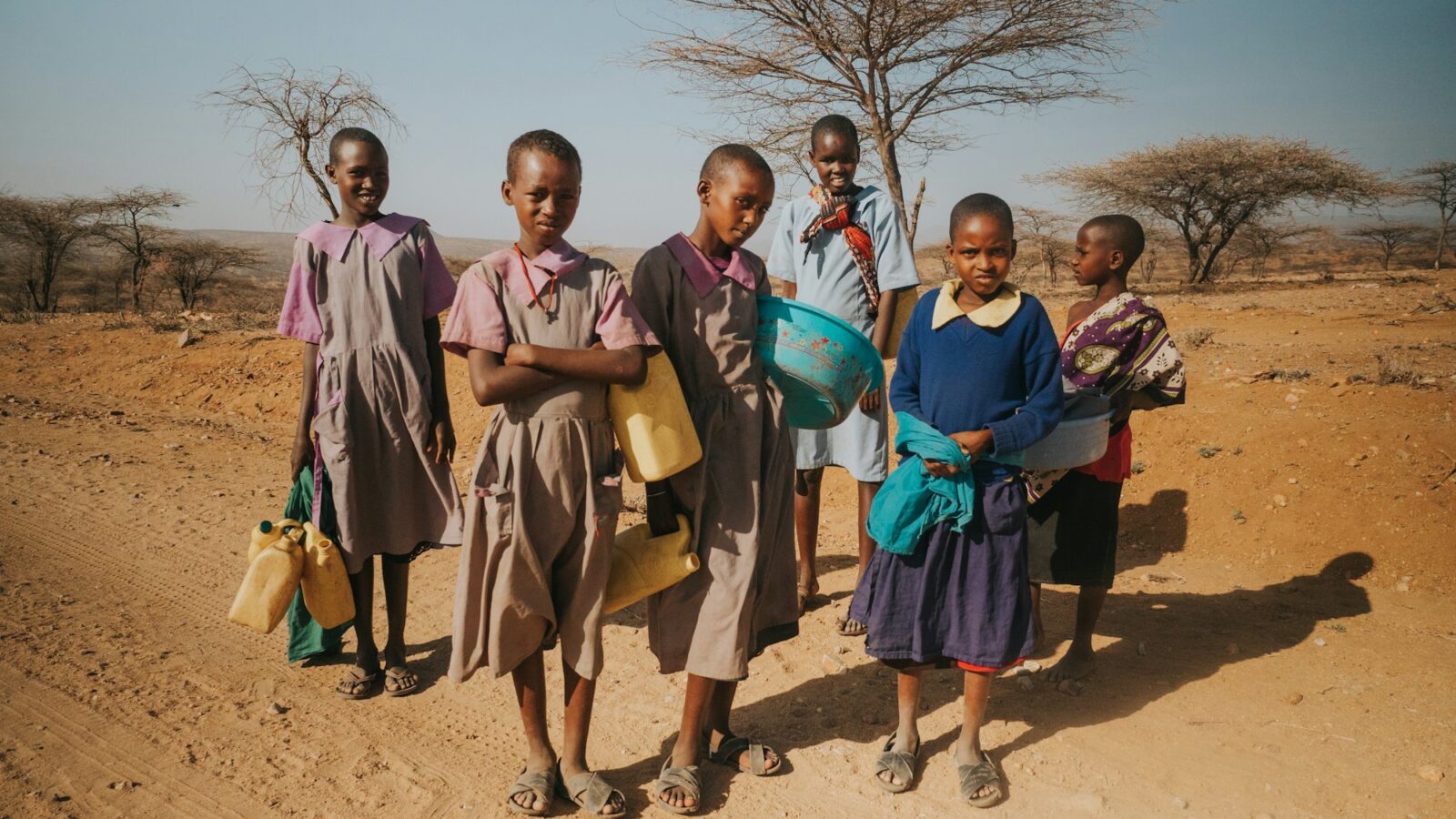
In the dry northern counties of Kenya, a bad season can turn into hungry children faster than aid can arrive. By the time a clinic sees a wave of wasted toddlers, the crisis is already here. The hard question has been whether anyone could see it coming at the level of a single ward, early enough to act.
The research behind this story is not new. A team from UC Berkeley, Cornell University, the International Food Policy Research Institute, the US Census Bureau and Kenya’s National Drought Management Authority (NDMA) published its forecasting method in PNAS in June 2025. What is new is what happened in 2026. In April, a release published by ILRI announced that a dashboard built on the method had been formally integrated into the NDMA’s drought early warning processes. In July, a Cornell researcher said the agency is using a retrained version to trigger early cash transfers to mothers.
Why earlier models struggled
The authors note that big data models had shown low predictive skill for acute malnutrition in specific communities. Their insight was about the training data. For years, NDMA field workers in 23 arid and semiarid counties have measured children’s upper arms every month at sentinel sites, a standard check for wasting. The team fed those monthly measurements, plus satellite measures of rainfall and vegetation health, conflict data and food prices, into gradient boosting models and kept retraining them as new months came in.
Three things to know about how well it works
- It looks one, three and six months ahead, the horizons the paper tested and the ones ILRI says the dashboard shows. From 2006 to 2009, when the sentinel sites stayed put, the paper’s best model caught 77% of impending hotspots one month out.
- It is far from perfect. Cornell reports that one month ahead, roughly half of its alerts matched real crises, and six months ahead, about a third did.
- It depends on steady data. When Kenya moved many sentinel sites in 2016, the model’s skill collapsed for about the next two years.
That last point is the paper’s real lesson: a forecast is only as good as the people quietly measuring children every month.
From a 2025 paper to 2026 practice
According to ILRI, the dashboard is updated monthly and is used in meetings of the Kenya Food Security Steering Group, and Kenya’s NDMA can now run and maintain it on its own. ILRI says pilots in Isiolo, Tana River and Marsabit are planned to explore what should trigger early action.
Cornell economist Christopher Barrett, a co-author, said in a Cornell news story that the NDMA is using a retrained version of the model to trigger anticipatory cash transfers to mothers in wards where child malnutrition is elevated, and that the team is working with the agency to evaluate that program rigorously. ILRI’s April release does not mention cash transfers. Cornell also reports that when the system flagged rising malnutrition in the Golbo ward of Marsabit county, in-person reports from unrelated organizations confirmed it.
The need is large. ILRI cites a national analysis estimating that more than 740,000 Kenyan children aged 6 to 59 months needed treatment for acute malnutrition between April 2025 and March 2026. Lead author Susana Constenla-Villoslada summed up what the data showed: “our results show that conflict and drought are main drivers of spikes in child malnutrition.”
No one should read this as hunger solved. The cash transfers have not yet been evaluated. But picture a herding family in Marsabit getting help a few weeks before the worst of a dry spell instead of after. If the evaluation shows that early money keeps children out of the clinic, Kenya will have built something other drylands can copy.
Sources
- High-frequency monitoring enables machine learning-based forecasting of acute child malnutrition for early warning
- Machine learning forecasts of child malnutrition integrated into Kenya's drought early warning system for the first time
- Using machine learning to predict and prevent child malnutrition
- Full text (open access) of the PNAS paper
Every claim in this story was checked against these sources on October 15, 2026. Spot something wrong? Tell us and the correction will be dated on this page.