Satellite AI Helped Gabon Catch Trawlers Poaching in a Reserve
A nonprofit group just overhauled the AI that tracks fishing boats around the world, sharpening its eye for illegal trawling. The tool's earlier version already helped Gabon catch three unlicensed trawlers poaching inside a marine reserve that protects one of the world's most important leatherback turtle nesting beaches.
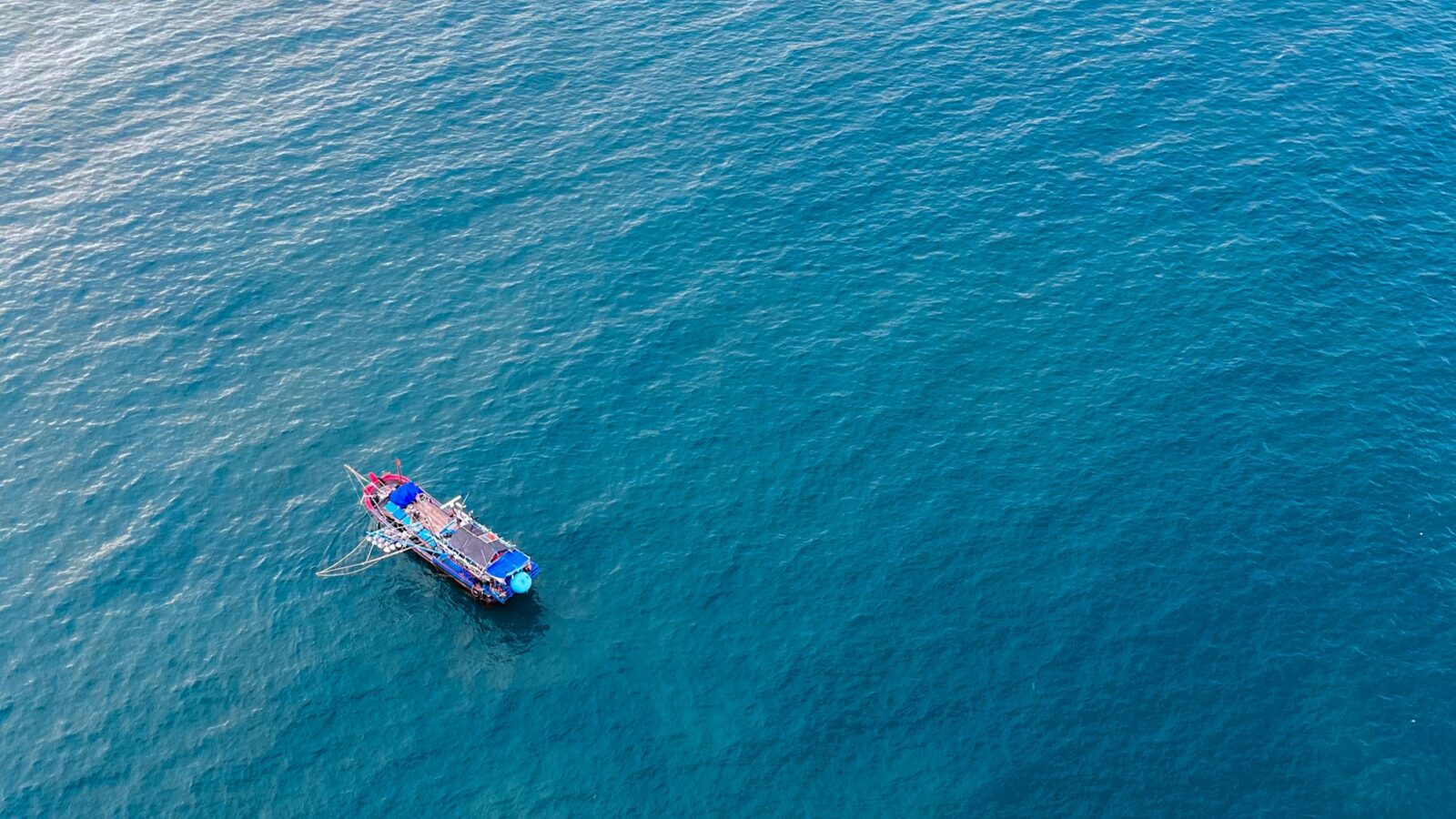
Gabon protects more than a quarter of its waters on paper, including the Grand Sud Reserve, a stretch of continental shelf that doubles as one of the world’s most important nesting beaches for leatherback sea turtles. Paper protection does not stop a trawler at night, though, not across a reserve too vast for any navy to patrol by sight alone.
On July 18, 2026, a Gabonese patrol boat found three industrial trawlers, the Rong Chang 19, the Rong Chang 26 and the Chang Hiu 01, about ten kilometers inside the reserve. None held a valid fishing license. One ship was caught trying to dump its net overboard before it was boarded; officers recovered octopuses, catsharks and angelsharks still alive inside it. The patrol knew exactly where to look because analysts at the nonprofit Global Fishing Watch had already studied the satellite data and told them.
What happened
That seizure was possible because of models Global Fishing Watch has spent years training to watch the ocean: software that reads satellite radar and tracking signals and works out which dots on the map are fishing boats, including the ones that switch off their trackers to hide. On October 21, 2026, the organization launched its biggest overhaul of those models since it was founded, retraining its fishing detection system on more than 1,000 expert-reviewed examples and building a sharper way to tell a trawler from a cargo ship or a tanker. The new version was applied retroactively to satellite data going back to 2012 and now draws on more than 5,300 newly mapped anchorages across 13 countries.
How the AI helped
Before any patrol boat leaves port, the AI has already done the hard part, sifting billions of vessel positions and radar images for the handful that matter. Global Fishing Watch turned that analysis into a tailored intelligence report naming the high-risk area and the vessels likely working it, then trained 25 Gabonese fisheries and naval personnel to read reports like it themselves.
Paul Woods, the group’s chief innovation officer, said the point of the upgrade is precision:
“The better we become at distinguishing actual fishing behavior from everything else happening at sea, the more useful that information becomes.”Paul Woods, Global Fishing Watch
His colleague Hannah Linder was careful to say what the new numbers do not mean:
“The world hasn’t suddenly started fishing less, we’ve developed a better way of distinguishing apparent fishing behavior.”Hannah Linder, Global Fishing Watch
Why it matters
A reserve nobody can watch in person exists mostly on a map, and the fish, turtles and coastal fishing families who depend on Gabon’s waters do not benefit from a map alone. The Gabon case is one of sixteen vessel seizures a decade-long anti-poaching effort called Operation Albacore has produced, and it shows what satellite intelligence can already do for a country that cannot afford a navy large enough to patrol its own reserve by eye.
The newest version of the AI, launched this October, has not yet produced its own public seizure story, since the Gabon case ran on the previous generation of the models. But Global Fishing Watch is already building toward more. A September partnership with the nonprofit AI lab Ai2 is bringing AI agents into the work, tools meant to flag suspicious patterns near marine reserves without a human analyst having to ask first, part of the group’s stated goal of mapping all human activity on the ocean by 2030.
Sources
- Global Fishing Watch Launches Major Data Upgrade for Clearer Picture of Global Fishing Activity
- In Gabon, Satellite Intelligence Leads to the Seizure of Illegal Trawlers
- Ai2 and Global Fishing Watch Unite to Bring AI Agents to Ocean Monitoring
Every claim in this story was checked against these sources on November 1, 2026. Spot something wrong? Tell us and the correction will be dated on this page.