Insect Wing Drawings Help Scientists Sharpen the Family Tree of Ants, Bees and Wasps
A new model reads insect wings from standardized images and shows which veins it used, a help to specialists who do this by hand. A Paris, Nanjing, Rennes and Oxford team used it to sharpen the ant, bee and wasp family tree.
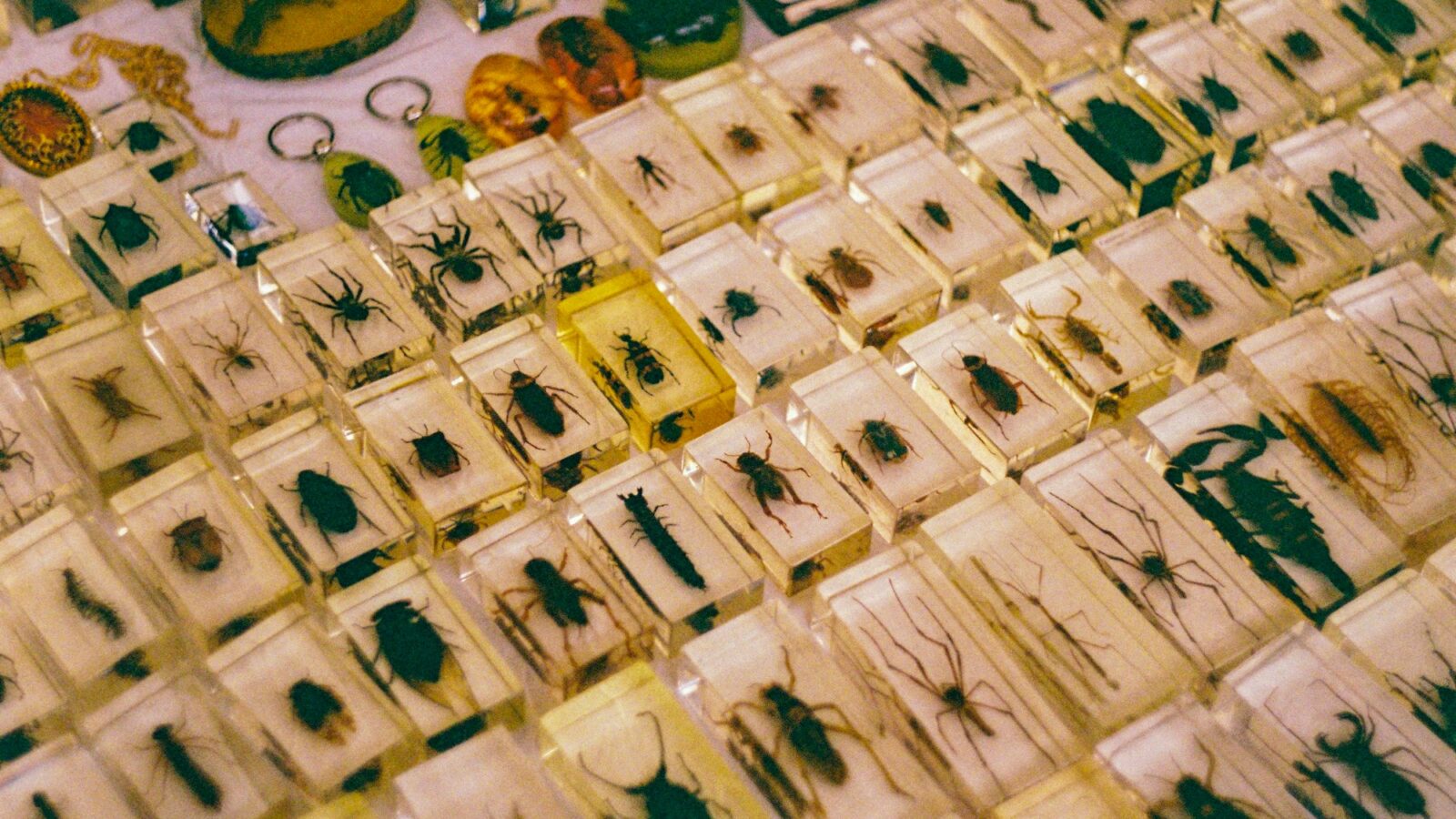
Walk into the back rooms of a natural history museum and you find drawers, and inside them, pinned insects: ants, bees and wasps among them. The wing is the part specialists read like a fingerprint. Its outline, and the little network of veins inside it, says a lot about what the animal is and who its relatives are. That reading has mostly been done by hand, one wing at a time, by placing landmarks and tracing outlines, and the authors of a new study call that work slow and labor intensive.
A team working across Paris, Nanjing, Rennes and Oxford has built a model to help with the reading, and then used it to ask how the wings of ants, bees and wasps changed over their long history. They call it HAIKA, and they published it on October 16, 2026 in Science Advances.
What happened
Ancheng Peng, Shihan Guan, Corentin Jouault, Frederic Legendre and their colleagues trained HAIKA on more than 1000 insect forewings, covering most major winged insect lineages. The wings were first turned into standardized black and white line drawings, traced from published diagrams or drawn fresh following standard entomological illustration practice, and then nobody labeled them. The model was simply asked to compress each wing into a short list of numbers and then rebuild the image from them, which pushes it to keep what matters about the wing.
Then the checks. On a set of 610 wings spanning the big insect groups, living and fossil, a standard statistical classifier working from HAIKA’s numbers sorted them into the right group 85.6 percent of the time, 84.1 percent under jackknifing (a stricter leave one out test). On 405 hymenopteran species, ants, bees and wasps, it reached 83.9 percent, 78.7 percent under jackknifing. The team also looked at where the model was looking. Its attention landed on the wing margins, the veins and the vein junctions, the same structures a specialist uses, and it matched the expert recognized midwing region in 203 of 210 hymenopteran images.
The family tree test is the one that earns trust. In a standard parsimony analysis, the classic hand built character matrix on its own recovered 11 of 23 deep nodes in the hymenopteran tree. Combining that matrix with HAIKA’s image derived numbers recovered 19 of 23, and it was the only version that recovered Apocrita, a grouping the authors call central and well established in hymenopteran systematics, as a single branch.
How the AI helped
The usual way to get numbers out of a wing is for a person to place landmarks on it, dot by dot, and to decide in advance which features count. Once the standardized drawings exist, HAIKA skips both steps. It learns from unlabeled images, and because it is built with attention modules, it can show the regions behind each number instead of handing over a verdict and keeping its reasons.
The authors benchmarked it against 14 other deep learning networks and four conventional shape descriptors. HAIKA did not win everything, but across clustering and dimension reduction tests it mostly produced tighter, cleaner groupings, and most of the rival models stared at the blank membrane between the veins, which tells you very little.
Why it matters
With the numbers in hand, the team asked how hymenopteran wings actually changed over time. Wing shape evolved about 1.7 times faster than venation complexity. And the big life changes in this group, becoming a parasitoid, becoming social, collecting pollen, were not consistently matched by big changes in the wing. The nodes tied to social living and pollen collecting showed mostly moderate shifts, and the origin of bees came with moderate changes in shape and minimal changes in the veins.
For the people who study and look after insect collections, the practical promise is the part worth watching. The authors note that morphology is essential for making sense of fossils, and a tool that turns a standardized wing image into numbers, shows its work, and comes with code anyone can download gives a small field a way to cover more ground. It also hands the next generation of taxonomists something concrete to test, argue with and improve.
Sources
- Deep learning reveals ecological decoupling and rate heterogeneity in Hymenoptera wing evolution
- Full open access text of the paper (CC BY), including results, limitations and disclosures
- HAIKA source code, processed datasets and analysis outputs
Every claim in this story was checked against these sources on October 22, 2026. Spot something wrong? Tell us and the correction will be dated on this page.