Odd Repeats in Virus DNA Could One Day Point Toward New Tools for Medicine
The kind of repeated DNA that led scientists to CRISPR has turned up beside enzymes in viruses that attack bacteria, and nobody yet knows what it does. Software agents searching 1.9 billion protein clusters flagged it, the work is a preprint, and the claim to have found it first is disputed.
Many of medicine’s molecular tools came out of the old fight between bacteria and the viruses that attack them. CRISPR is the famous example, and it was first noticed as a strange regularity: repeated DNA in bacterial genomes, with particular genes always sitting nearby, long before anyone knew what they did. Gene editing came much later. That is why another odd repeat deserves attention, and patience.
A run of software reading raw genetic code stopped on that kind of pattern. According to Anthropic, whose announcement is the source for everything about how the search ran, an agent counted and measured the repeats, compared them with known systems, checked the literature and filed a report for a person to read. What it flagged, in the DNA of jumbo phages, the oversized viruses that attack bacteria, is a family the team calls array associated reverse transcriptases, or ART. A reverse transcriptase copies RNA back into DNA. The unusual thing is the neighborhood: an array of repeat units roughly 200 nucleotides long, plus a dedicated partner gene whose function is not known.
The preprint, titled “Autonomous AI agents discover reverse transcriptases with tandem repeat arrays,” went up on bioRxiv on October 11, 2026, by Peter H. Yoon, Januka S. Athukoralage, Emmanuel Ameisen, Eric Kauderer-Abrams, Nicholas T. Perry and Matthew G. Durrant, all at Anthropic, which had announced the finding on September 23, 2026. The reverse transcriptase itself had been identified in earlier studies. Anthropic says Claude appears to be the first to notice the array and the partner gene beside it, a claim a University of Copenhagen researcher has publicly questioned.
Why anyone would hope for something here
If the arrays turn out to guide the enzyme to particular sequences, that would be a new kind of programmable system, and programmable systems are where gene editing tools come from. That is the hope, and plainly only a hope: a chain of ifs, every one of which has to hold.
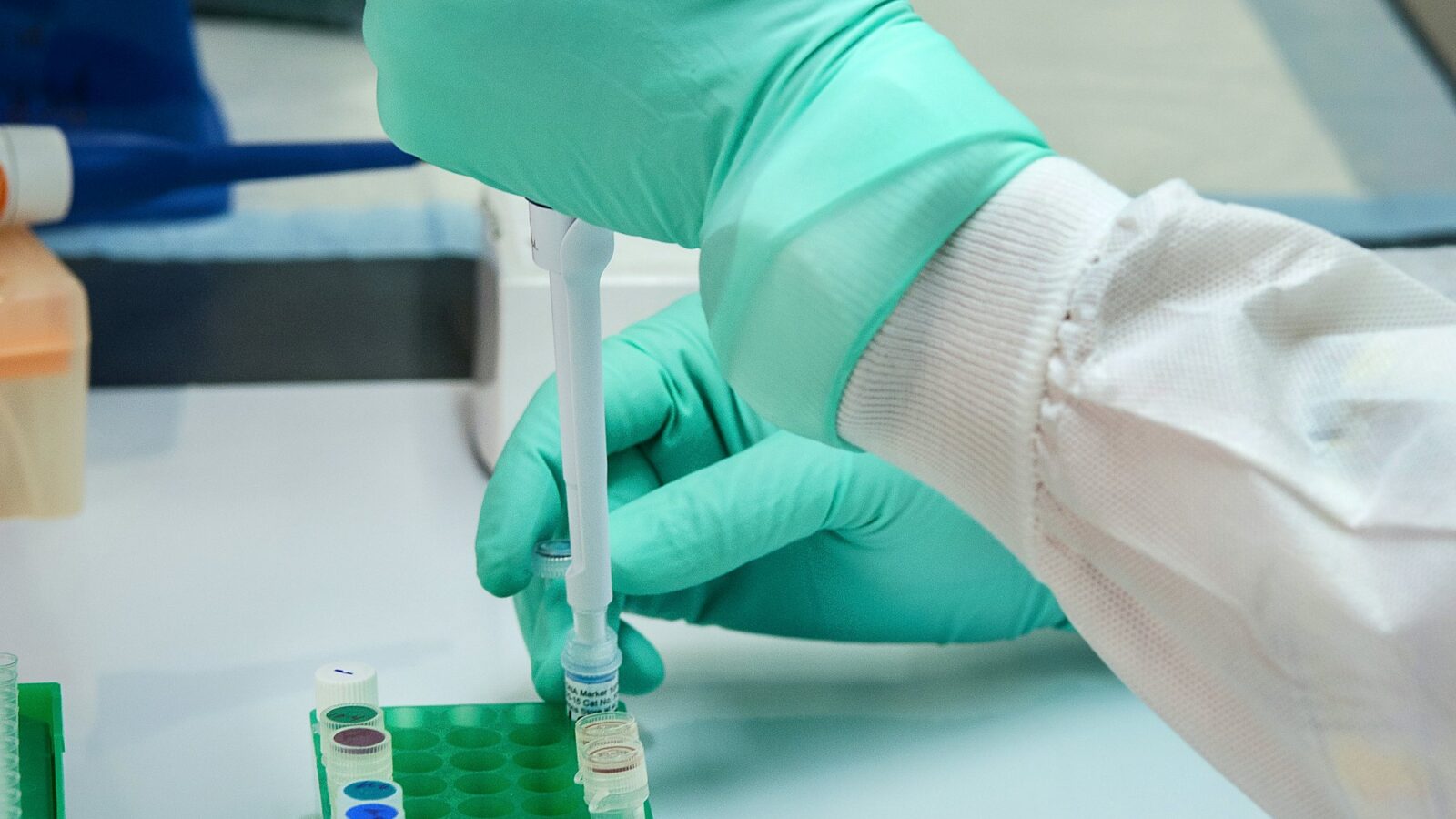
Human scientists did the laboratory work, at Anthropic’s Bay Area lab according to the company. Expression data in the preprint show the arrays are highly expressed and appear as discrete units during infection of Staphylococcus by phage, which the authors say suggests a reverse transcriptase system directed by distinct RNAs. Suggests. Not shows. As an explainer in The Conversation noted, nobody has yet shown that the enzyme is active, that it copies the array RNA into DNA, or what the system does in the virus.
How the pattern was spotted
The preprint says Claude Code instances surveyed reverse transcriptase loci across 1.9 billion protein clusters, and that session transcripts show the model recognized the family by reading the DNA and noticing the repeats. Anthropic’s announcement adds that roughly 950 agents ran for about 21 hours and used around 210 million tokens, collecting more than 200,000 reverse transcriptases, narrowing those to about 3,500 candidate systems and then to 20 written up for human readers. Anthropic says its own contribution was an opening prompt asking the model to search a large DNA sequence database for interesting reverse transcriptases, plus the lab work afterward. None of it was a sure thing: The Conversation reports that in additional runs the agents missed the repeat array entirely.
Feng Zhang, a CRISPR pioneer and professor at MIT, reviewed the preprint. In a statement quoted in Anthropic’s announcement, he called the identification of the RNA repeat arrays “genuinely intriguing” and said it “merits further investigation.” That is a sentence about promise, not function.
What would have to happen for this to matter
Somebody has to put it in a tube. The question is specific: what is that enzyme copying, and what does the phage get out of it? If the arrays do program the enzyme, a new family of tools becomes thinkable, and the people who benefit are patients a long way down the line. If not, something is still going on in these phages that the literature had not described, which is worth knowing too.
For now ART is a shape in a database with an interesting enzyme beside it. The useful next step is independent laboratories, preferably with no stake in the answer, finding out which it is.
Sources
- Autonomous AI agents discover reverse transcriptases with tandem repeat arrays
- Claude discovers a novel enzyme system with CRISPR-like repeats
- A biologist queries whether AI 'borrowed' his work to make major discovery: an expert explains the rules
Every claim in this story was checked against these sources on October 15, 2026. Spot something wrong? Tell us and the correction will be dated on this page.